About Afrabia Center for Afro-Iraqi Elites
A trilingual academic research platform dedicated to African and Afro-Iraqi studies.
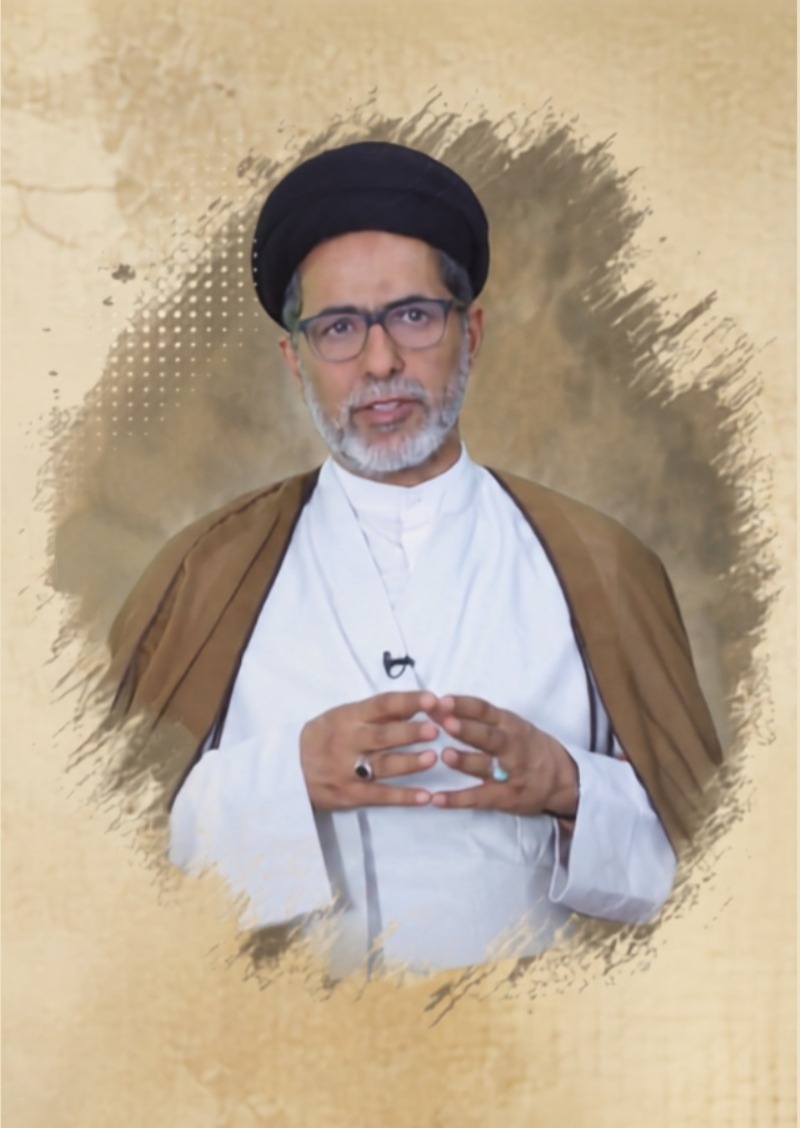
Statement by the Director and Founder of the Afrabia Center for Afro-Iraqi Elites
In the name of God, the Most Gracious, the Most Merciful
A careful observer of the transformations taking place across the contemporary Afro-Arab space will note that the challenges facing its societies are no longer confined to political, economic, or social crises, nor to security problems that can be addressed through traditional tools alone. Increasingly, they concern deeper issues related to the production of knowledge, the formation of awareness, perceptions of the other, the nature of relations between societies, and the resulting patterns of influence, dependence, and unequal interdependence.
Within this interconnected space, Iraq occupies a distinctive position. Alongside its civilizational and historical depth, geographical location, and Arab and Islamic heritage, Iraq possesses a substantial body of historical and contemporary experience that positions it to contribute to understanding the transformations taking place in the region and to opening new avenues of communication with Africa and its societies and intellectual elites. The relationship between Iraq and Africa, therefore, should not be viewed solely through its political or diplomatic dimension. It should also encompass its cultural, intellectual, social, developmental, and strategic dimensions.
From this perspective, some of the challenges facing the Afro-Arab space can be understood in light of the persistence of certain forms of domination and the reproduction of unequal relations. This issue has been examined by various intellectual schools and approaches, particularly postcolonial scholarship and dependency theories. The tools of international influence have evolved over time and no longer necessarily take the form of direct intervention. Knowledge, media, communication technologies, and the production of perceptions and images have become among the fields that shape how societies perceive themselves, others, and the world around them.
In some contexts, this has turned elements of cultural diversity and civilizational richness—which could serve as sources of strength and integration—into factors contributing to estrangement, misunderstanding, and the reproduction of stereotypes. This creates a need to move from separation toward mutual understanding, from preconceived judgments toward research and knowledge, and from viewing difference as a source of conflict toward treating it as a space for dialogue and integration.
The Afrabia Center for Afro-Iraqi Elites was established in response to this need and out of a conviction that lasting relations between Iraq and Africa begin, even before political and economic agreements, with building bridges of knowledge and mutual understanding between elites and societies. Accurate knowledge of the other, together with an understanding of its history, culture, and particularities, is a fundamental condition for building more balanced and sustainable partnerships.
For this reason, the concept of the “crisis of mutual perception” occupies a central place among the Center’s concerns. It is understood as one of the issues that can obstruct the development of healthy relations between societies when stereotypes and preconceived judgments accumulate, when historical experiences are viewed from a single perspective, or when political and historical disagreements become barriers to knowledge and cultural understanding between peoples.
The Center does not regard this issue as the responsibility of one side alone. Rather, it seeks to examine it within a scholarly framework based on multiple sources and perspectives, distinguishing historical facts from their interpretations, opinion from information, and collective memory from findings that can be established through scientific research.
Historical controversies, particularly the history of the slave trade, therefore form part of the subjects requiring calm and balanced study—one that moves beyond selectivity and generalization and takes into account the multiple trajectories, actors, and historical contexts that shaped this phenomenon in Africa, the Arab world, Europe, and the related regions. A scholarly approach to such issues is not intended to exonerate one side or condemn another. Its aim is to reach a more accurate understanding, correct mutual stereotypes, and make room for a historical reading broad enough to account for the complexity of the human experience and its multiple dimensions.
The Afrabia Center for Afro-Iraqi Elites was founded in 2026 with a vision focused on establishing a knowledge-based and institutional platform that strengthens communication between Iraq and the African continent and supports the production of knowledge and the exchange of expertise among elites in areas of common interest. The Center was established with the generous support of His Eminence Sheikh Abdul Mahdi al-Karbala’i (may his honor endure), the religious authority overseeing the Holy Shrine of Imam Hussein, and Mr. Hassan Rashid al-Abayji (may his success endure), Secretary-General of the Holy Shrine of Imam Hussein. The Center officially began its activities under the auspices of the Holy Shrine of Imam Hussein.
The choice of the name “Afrabia” is linked to the significance the concept has acquired in contemporary African thought, particularly through the late Kenyan intellectual Ali Mazrui. He used the term as part of his vision of the historical, geographical, and cultural interconnectedness between Africa and the Arab world, referring to a space in which peoples, cultures, and societies have interacted throughout history, transcending the geographical boundaries created by the Red Sea.
For the Center, therefore, “Afrabia” is not merely a name. It expresses a knowledge-based vision that sees what connects Iraq and the African world as extending beyond official relations, and recognizes that history, civilizational interaction, and geographical and cultural ties can provide a foundation for building a new future of cooperation and communication.
The Center believes that this vision can only be achieved through informed elites capable of producing knowledge and transforming it into visions, programs, and strategies. It does not restrict the concept of the elite to academia alone. It also encompasses researchers, thinkers, intellectuals, and social, religious, and professional experts, as well as anyone capable of contributing to an understanding of challenges, formulating solutions, and helping build societies better equipped to respond to rapidly changing conditions.
The Center defines Afro-Iraqi elites as the scientific, intellectual, cultural, social, religious, and professional competencies and capacities capable of contributing to the construction of bridges of communication between Iraq and Africa, producing knowledge related to their shared concerns, and developing visions and programs that serve their mutual interests.
To translate this vision into practice, the Center operates through four interconnected areas:
First: Intellectual and Knowledge Exchange
Through exchanges of visits, meetings, and intellectual and academic delegations involving Iraqi and African researchers and elites, contributing to direct understanding, the exchange of expertise, and the development of sustainable knowledge networks.
Second: Capacity Building and the Exchange of Expertise
Through scientific workshops and specialized training programs aimed at developing competencies, strengthening capacities, and exchanging expertise in priority scientific and professional fields.
Third: Strategic Thinking and the Production of Policy Visions
Through brainstorming sessions, forums, and strategic dialogues that examine current challenges, anticipate future transformations, and formulate visions and programs that strengthen shared intellectual, developmental, and strategic interests.
Fourth: Youth Empowerment and Development
Through providing young people with practical skills, knowledge, and areas of specialization that help them develop their capacities, participate more effectively in the labor market, and contribute to improving the conditions of their societies.
Across all these areas, the Center is committed to making knowledge, scientific research, and dialogue its principal tools. Its intellectual output is based on multiple sources of knowledge, respect for differences in perspective, a distinction between information and analysis, and reliance on scientific methodology in examining historical and contemporary issues, away from stereotyping, generalization, and exclusion.
The Afrabia Center for Afro-Iraqi Elites seeks to serve as a scientific, cultural, social, and religious platform for dialogue and communication, bringing together researchers, academic and official institutions, intellectuals, professionals, and elites from Iraq and Africa. It provides a space for joint reflection, collaborative work, and intellectual integration.
This dialogue is founded on respect for human beings, recognition of diversity, belief in shared cultural and intellectual values, and rejection of discrimination on the basis of race, religion, or sect, while respecting the civilizational and cultural particularities of every society.
Our ambition is not to reproduce an idealized image of the past, nor to overlook areas of disagreement or controversial issues. Rather, it is to develop a more balanced understanding of the past, a more accurate grasp of the present, and a vision better equipped to anticipate the future.
From Iraq, which throughout its history has been a meeting place for civilizations and cultures, we aspire for Afrabia to become a new bridge of knowledge between Iraq and Africa—a bridge across which ideas, expertise, and competencies can move, spaces for dialogue can expand, and partnerships grounded in knowledge, respect, and mutual interests can be built.
The Center will remain committed to the belief that differences among peoples should not become barriers to mutual understanding; that knowledge can provide a path beyond stereotypes; and that sincere dialogue can transform distant memories into an opportunity for understanding, diversity into a source of strength, and difference into a space for integration.
“For people are of two kinds: either a brother of yours in religion or your equal in creation.”
Dr Hashim Al-Awadi
Director of the Afrabia Center for Afro-Iraqi Elites
Newsletter
Subscribe to our newsletter for the latest research and updates.