When the Road of al-Husayn Speaks
The Million-Strong Procession: A Cultural Discourse of Defiance in a Region Torn by War
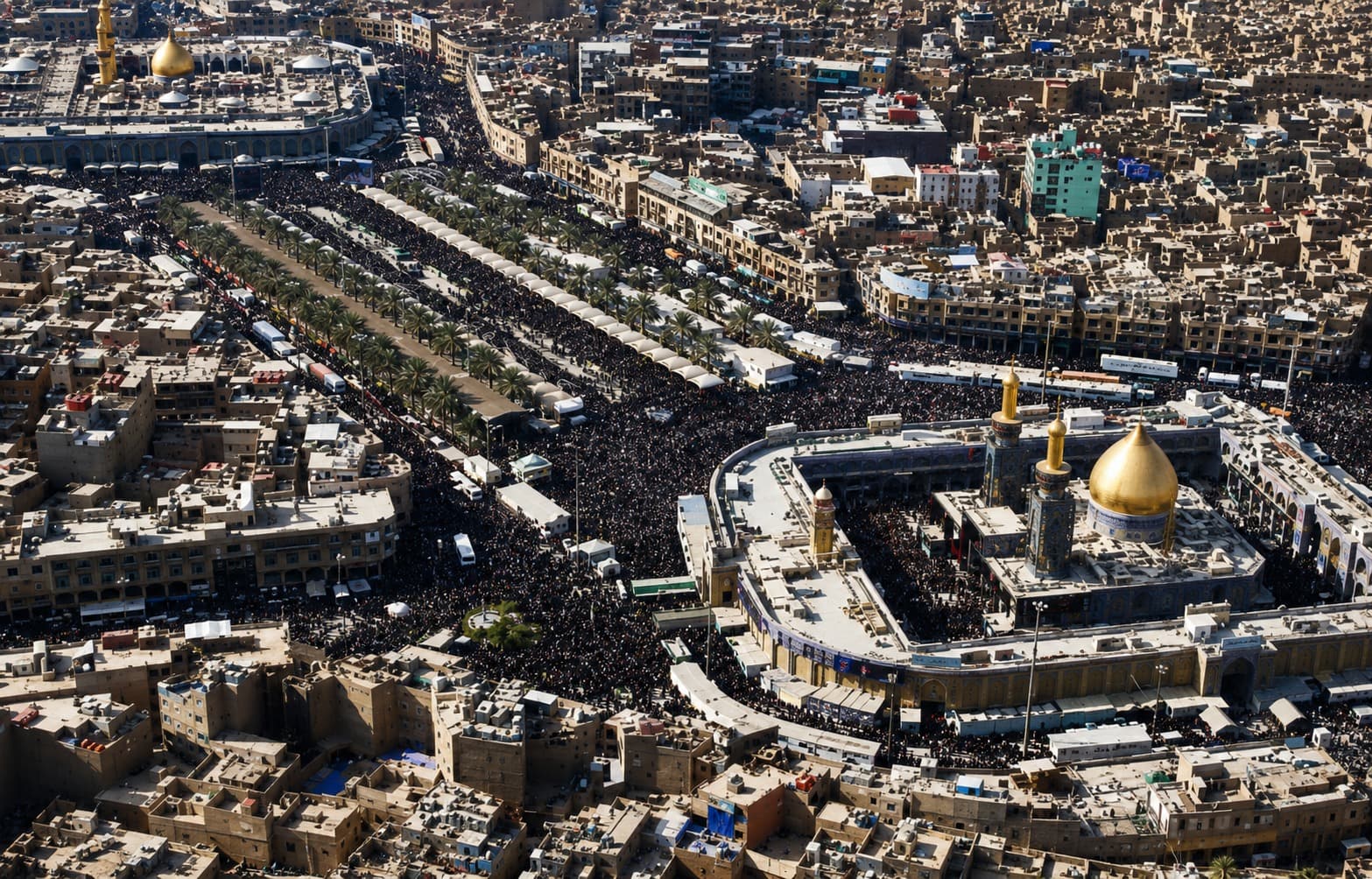
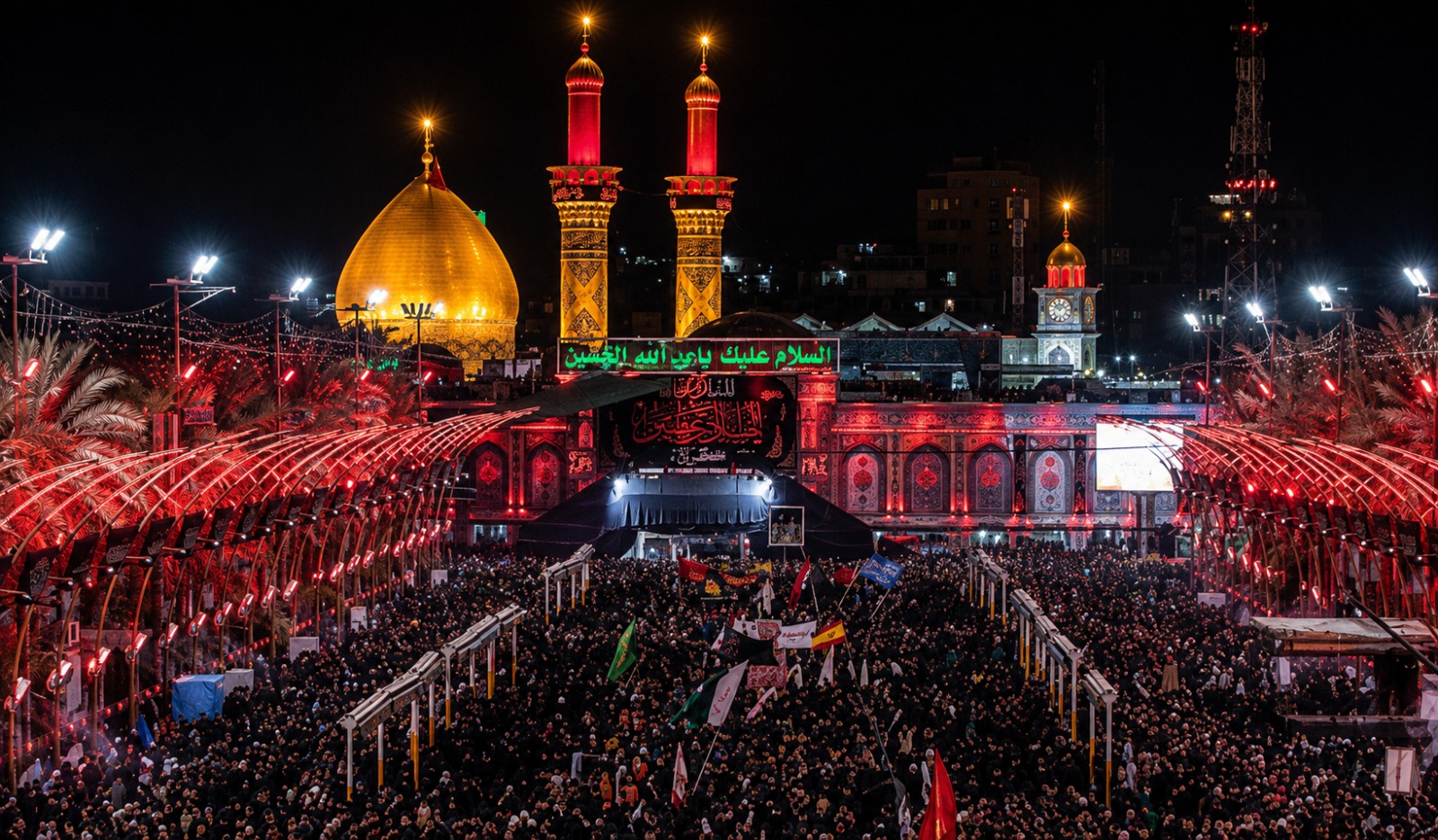
The Arbaeen pilgrimage in Iraq stands out as a unique religious, social, and cultural phenomenon. Far more than a traditional devotional ritual, it has evolved into the world’s largest annual human gathering. Millions of visitors converge from across Iraq and from around the world to commemorate the martyrdom of Imam al-Husayn ibn Ali (peace be upon him), the grandson of the Prophet Muhammad (peace be upon him), who was killed at the Battle of Karbala in 680 CE.
The movement unfolds over several consecutive days, reaching its culmination on the fortieth day of mourning for al-Husayn’s martyrdom. It is a deeply spiritual occasion that embodies values of sacrifice, justice, and the pursuit of moral integrity in the face of oppression and tyranny. At the same time, it offers a striking demonstration of society’s ability to organize itself and sustain extensive networks of mutual support.
v The Demanding Route and the Scale of the Crowds
Pilgrims set out on foot from Iraq’s most distant provinces, including from Basra Governorate, where some routes extend for more than 600 kilometres. The journey takes nearly two weeks on foot. They are joined by pilgrims from neighbouring countries, including the Gulf states, Iran, Pakistan, Afghanistan, and others, as they make their way through extremely harsh climatic conditions. During the scorching summer months, temperatures rise above 48°C, turning the journey into a formidable test of physical endurance and spiritual resilience.
Yet these conditions do not deter the vast numbers of pilgrims who continue to arrive. In recent years, their numbers have exceeded 21.5 million, temporarily transforming Karbala’s population from approximately two million residents into more than twenty million within a matter of days. The resulting surge places extraordinary logistical, security, and infrastructural demands on the local area.
v The Economy of Giving and Social Capital
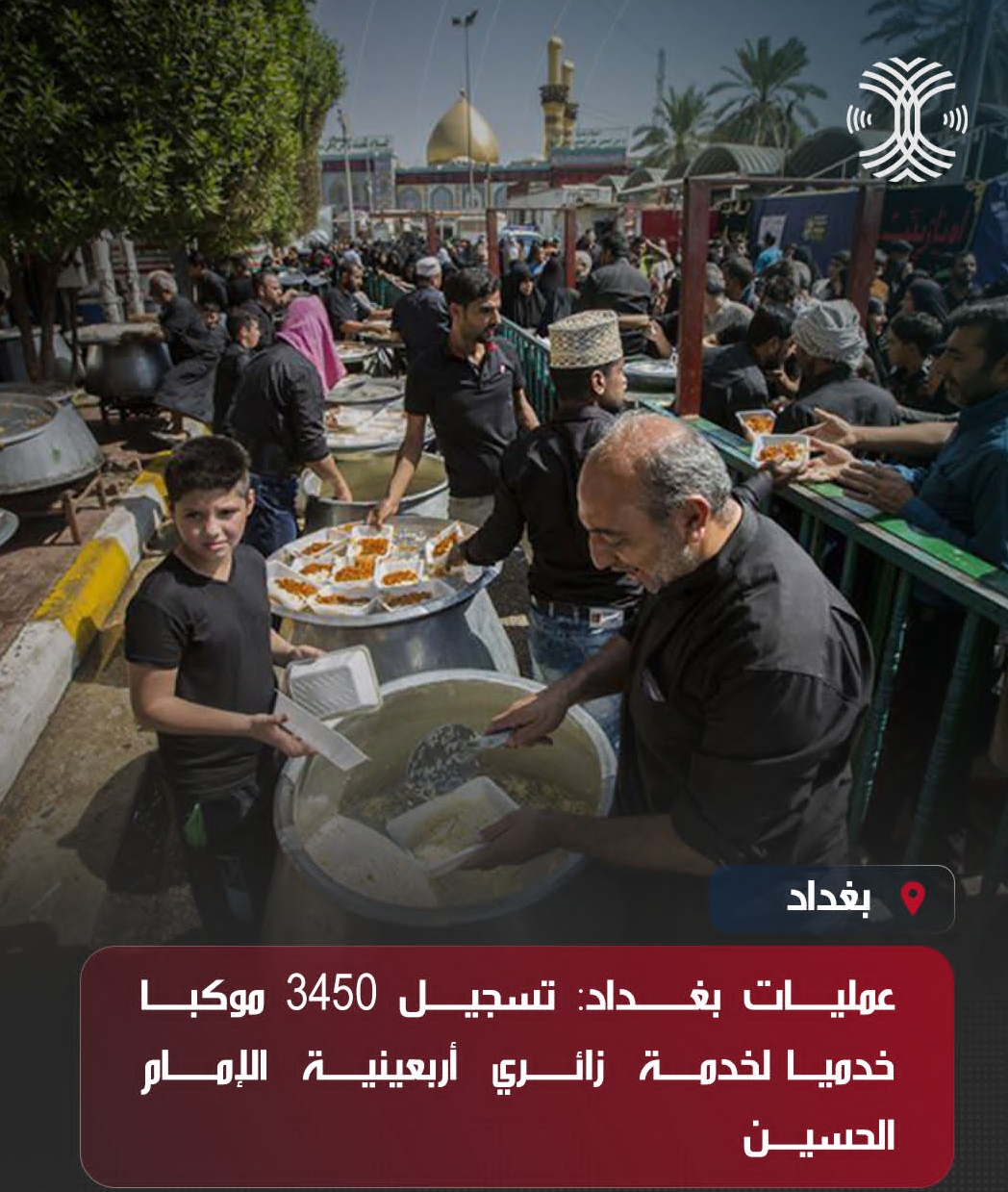
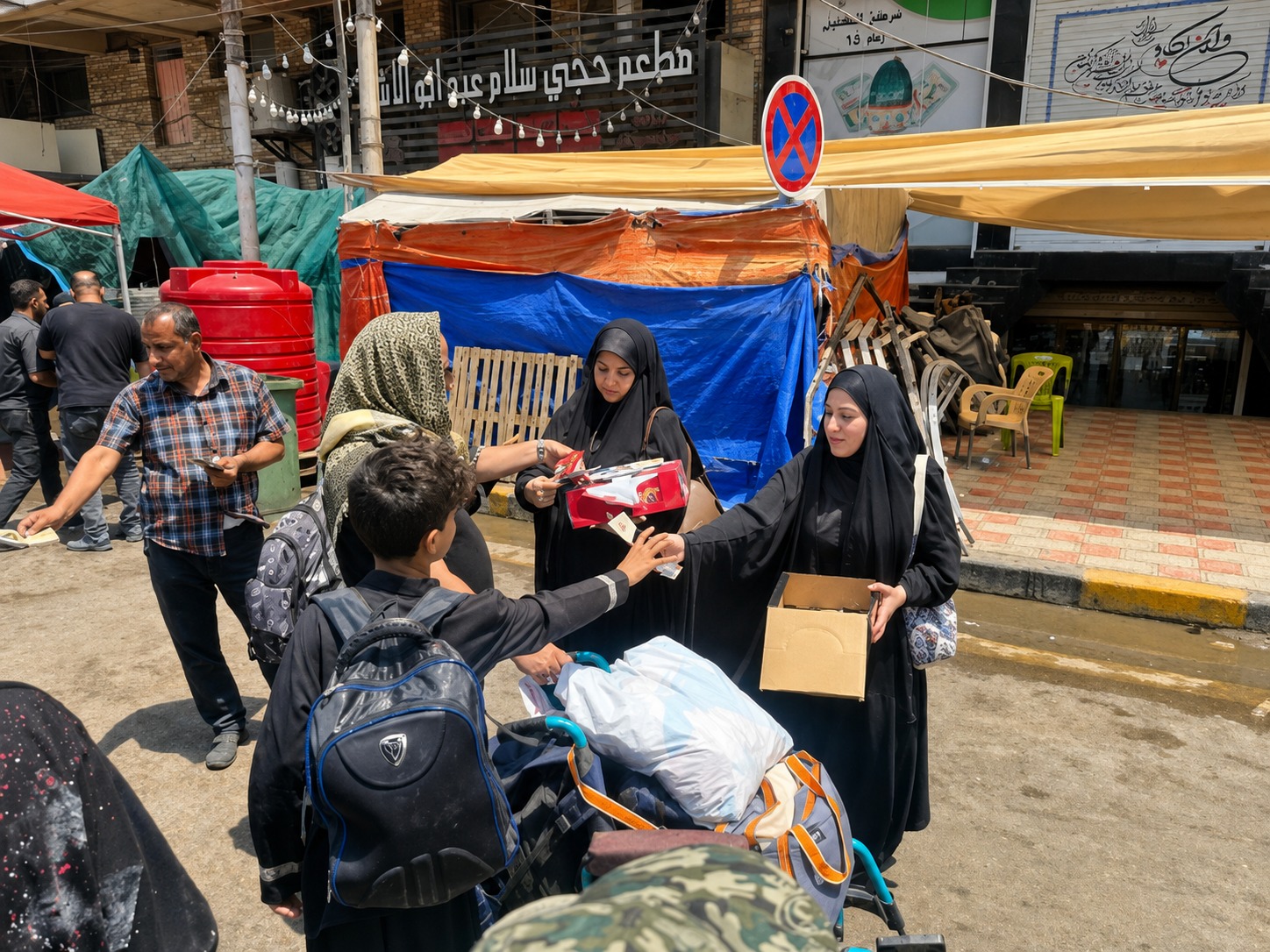
The distinctive character of Arbaeen lies not simply in the extraordinary size of the crowds, but also in the nature of its “gift economy” and the broad-based solidarity that sustains it. Iraqi families host pilgrims along the entire route, while thousands of tents and service processions—known locally as mawākib—are established along the roads. They operate through extensive networks, with some structures reaching a scale comparable to that of aircraft hangars in both size and capacity.
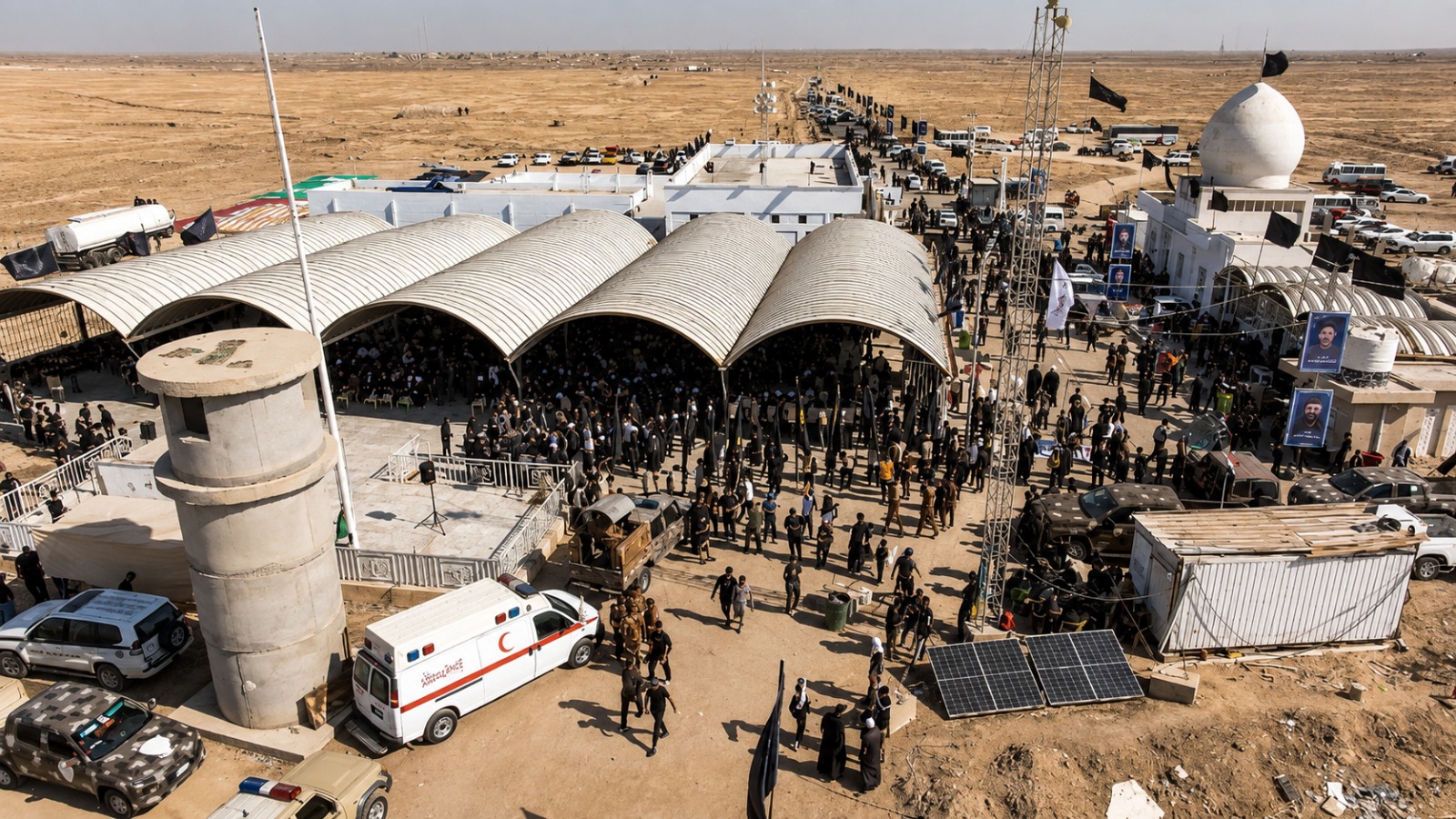
Millions of citizens volunteer to provide virtually every form of assistance, from food and beverages to medical care, massage, laundry services, and manually operated cooling facilities. These services are provided without financial compensation or commercial motivation. This form of “solidarity economy,” rooted in collective volunteerism, represents a rare anthropological model that runs counter to the logic of modern capitalism and contemporary individualism.
v Religious Symbolism and the Formation of Collective Identity
Within Shiite religious consciousness, Arbaeen carries profound doctrinal significance. It is not simply a commemoration of a tragedy from the distant past; rather, it gives tangible expression to an ethical message that rejects tyranny and draws upon the values embodied in the Battle of Karbala as a guiding reference for resistance and steadfastness.
This collective identity is sustained by a shared historical memory transmitted through epic narratives and ritual practices that have inspired literary and artistic works across continents. Participation extends across generations, from children to the elderly, while young people are particularly prominent, providing much of the event’s organizational dynamism and spiritual vitality.
v National Sovereignty and Local Agency: Religious Authority and the State amid Polarization
Popular involvement in supporting pilgrims and meeting their needs is no longer confined to Iraqis. Service tents and mawākib have increasingly taken on an international character, with numerous service groups coming from neighbouring countries. This reflects the scale of support generated by Arbaeen and the spirit of cooperation and solidarity that surrounds the pilgrimage.
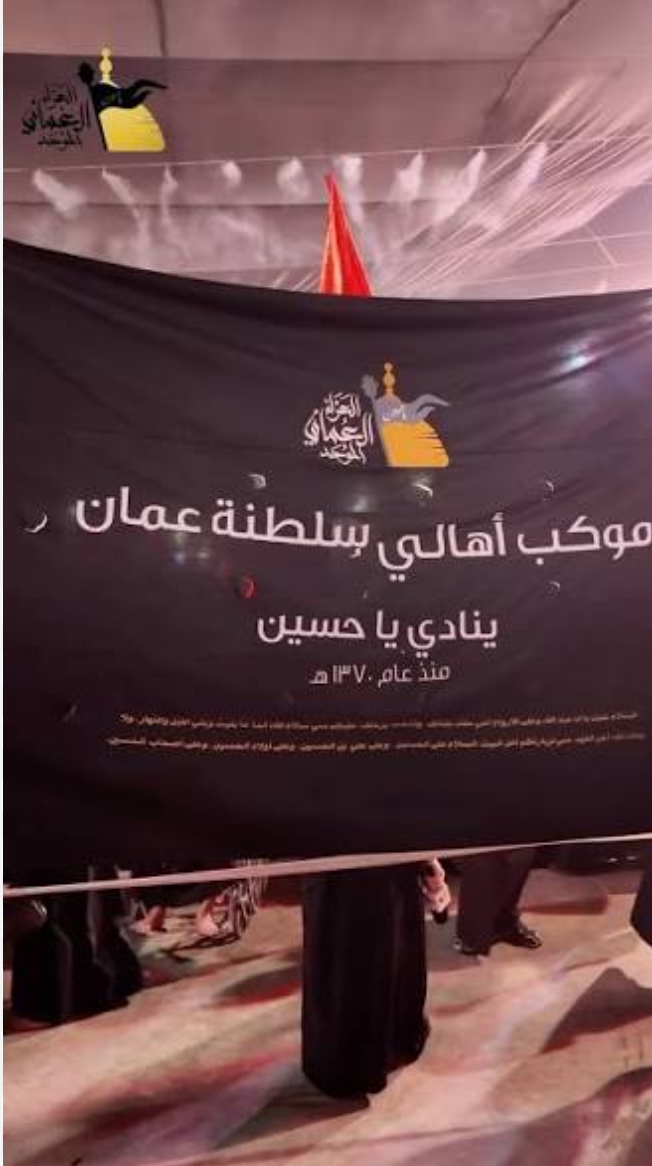
Nevertheless, a closer assessment shows that the pilgrimage remains, in its essence and foundational social capital, a distinctly Iraqi phenomenon. Its core organizational and spiritual framework rests on two principal pillars:
- The religious institution in Najaf al-Ashraf (the supreme religious authority): It provides the event with its moral and religious guidance and seeks to preserve the observance as a platform for national unity and humanitarian solidarity, keeping it removed from partisan and political instrumentalization.
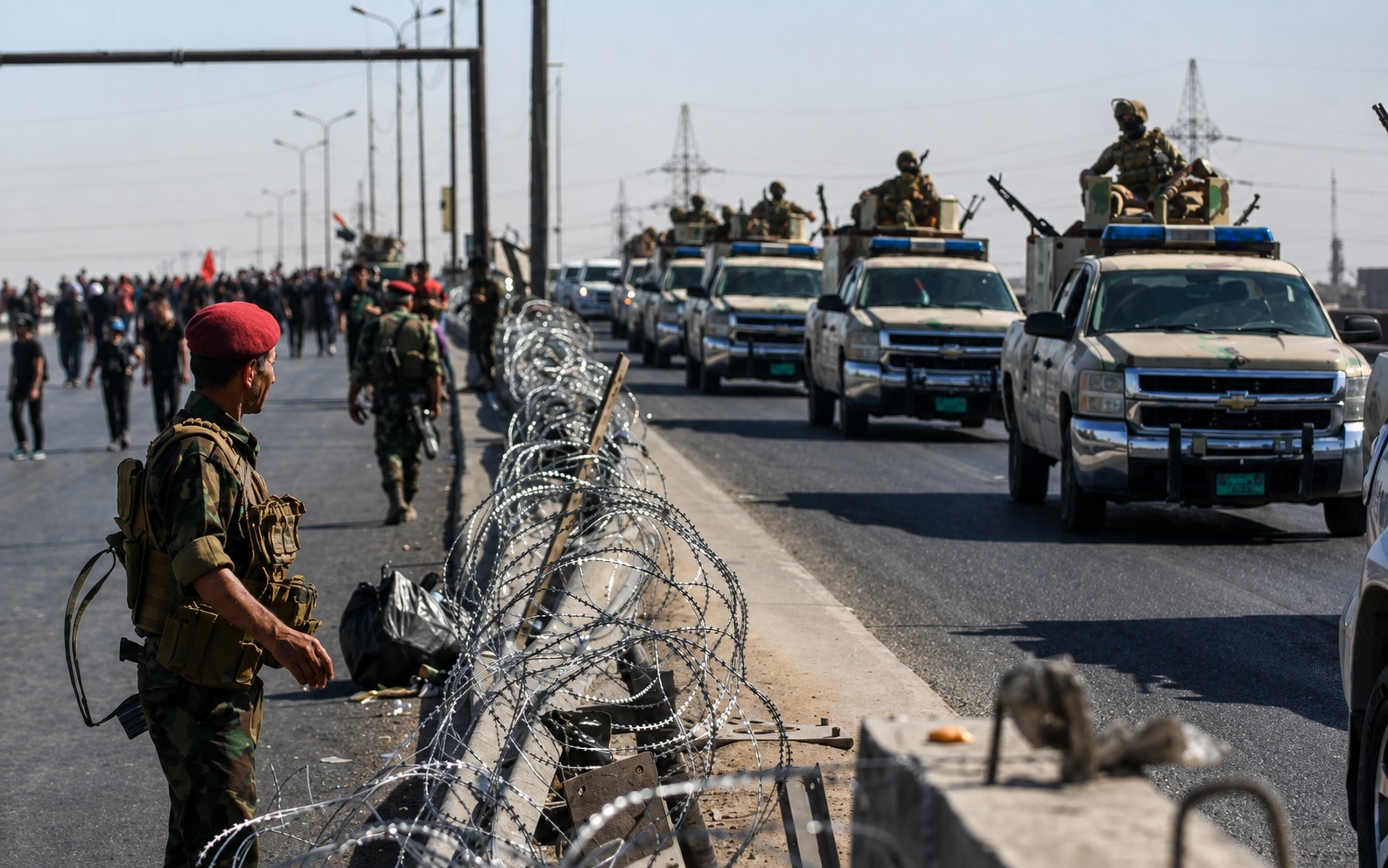
- Locally driven capacity and the Iraqi state: Iraqi security and public-service institutions are responsible for crowd management, border security, and the operation of complex logistical networks. At the same time, the “Iraqi popular mawkib” forms the principal financial and food-support backbone of the event. Despite the complexity of the security challenges involved, state institutions and Iraqi society demonstrate a significant capacity to manage the situation on the ground and oversee one of the largest human gatherings in the world.
v The Environmental Dimension and Sustainability: An Existential Challenge in an Age of Drought
While the logistical organization of services has achieved remarkable results, environmental sustainability has emerged as the greatest structural challenge facing the Arbaeen pilgrimage. Iraq is confronting a severe climate crisis marked by chronic water scarcity and declining water levels in the Tigris and Euphrates, alongside increasingly extreme temperatures.
The mass movement of millions of people places enormous pressure on the local environment:
- The plastic waste crisis: Hundreds of millions of plastic containers and bags are used each day to distribute water and food. This generates tons of non-biodegradable waste, placing pressure on the waste-management infrastructure of the southern governorates beyond its existing capacity.
- Water security and pressure on sanitation systems: Ensuring access to clean drinking water for pilgrims and managing wastewater constitute major challenges in a context of declining river flows and deteriorating water-treatment networks.
This situation has encouraged research and religious institutions to explore sustainable solutions, including initiatives promoting “green mawākib,” waste recycling, and measures to rationalize consumption and reduce reliance on plastic. The objective is to ensure that the observance does not become an additional environmental burden on Iraq’s already strained water and development resources.
v Arbaeen, Soft Power, and the World’s Great Gatherings
The Arbaeen experience demonstrates how religious and cultural rituals can function as powerful geocultural instruments in the projection of soft power and the shaping of influence. A comparison between Arbaeen and some of the world’s largest human and religious gatherings highlights the distinctive nature of its organizational model:
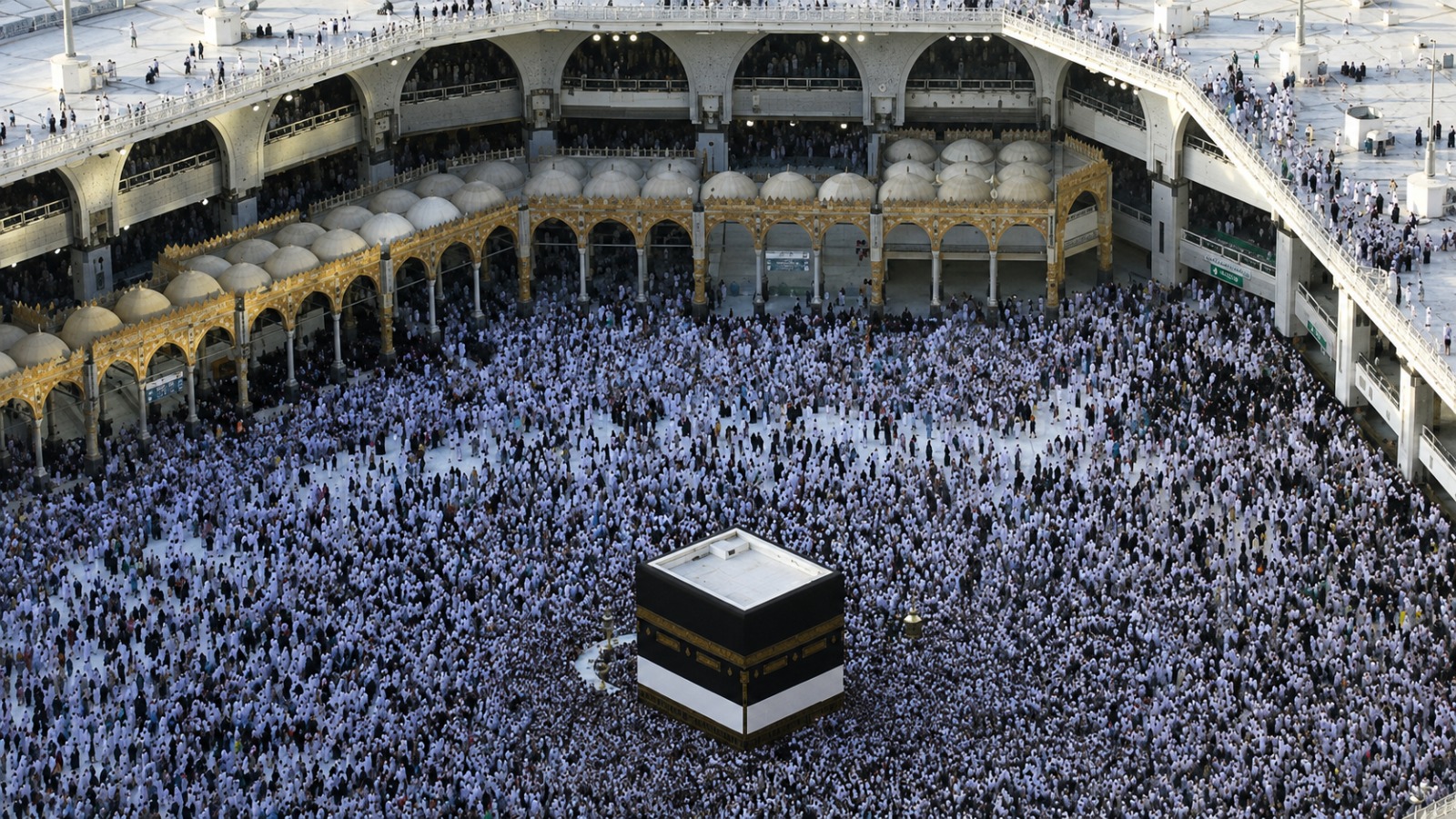
- The Hajj season in Mecca: Hajj represents a major pillar of Islamic soft power across the Muslim world and, in Saudi Arabia, is administered through a highly centralized system based on precise quotas and a defined annual capacity of approximately 2–3 million pilgrims. Arbaeen, by contrast, relies on a model of “decentralized self-organization” capable of accommodating more than 20 million visitors without prior entry restrictions.
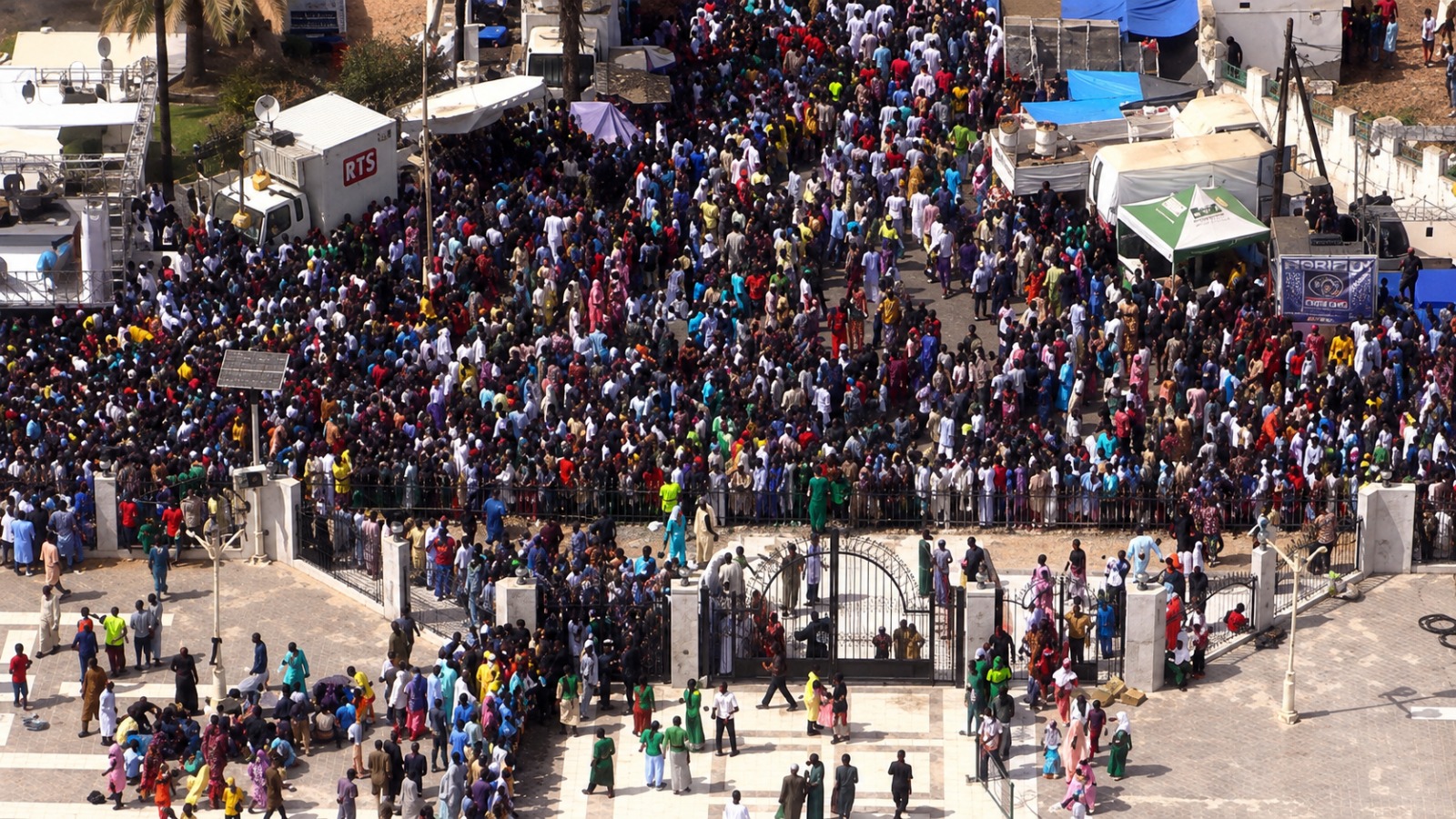
- The Grand Magal of Touba, Senegal: This represents the experience most comparable to Arbaeen in terms of its reliance on a non-capitalist “gift economy.” The Mouride festival in Touba attracts between 4 and 5 million visitors annually to commemorate the exile of Sheikh Ahmadou Bamba. Both gatherings depart from conventional market logic and rely on a culture of unrestricted hospitality—the African tradition of Téranga on the one hand and the Iraqi mawākib on the other. Both also operate with a degree of local organizational and religious autonomy that reflects a clear form of cultural sovereignty removed from partisan political involvement. Arbaeen nevertheless surpasses the Magal in the sheer scale of participation and in the extended walking route connecting different cities.
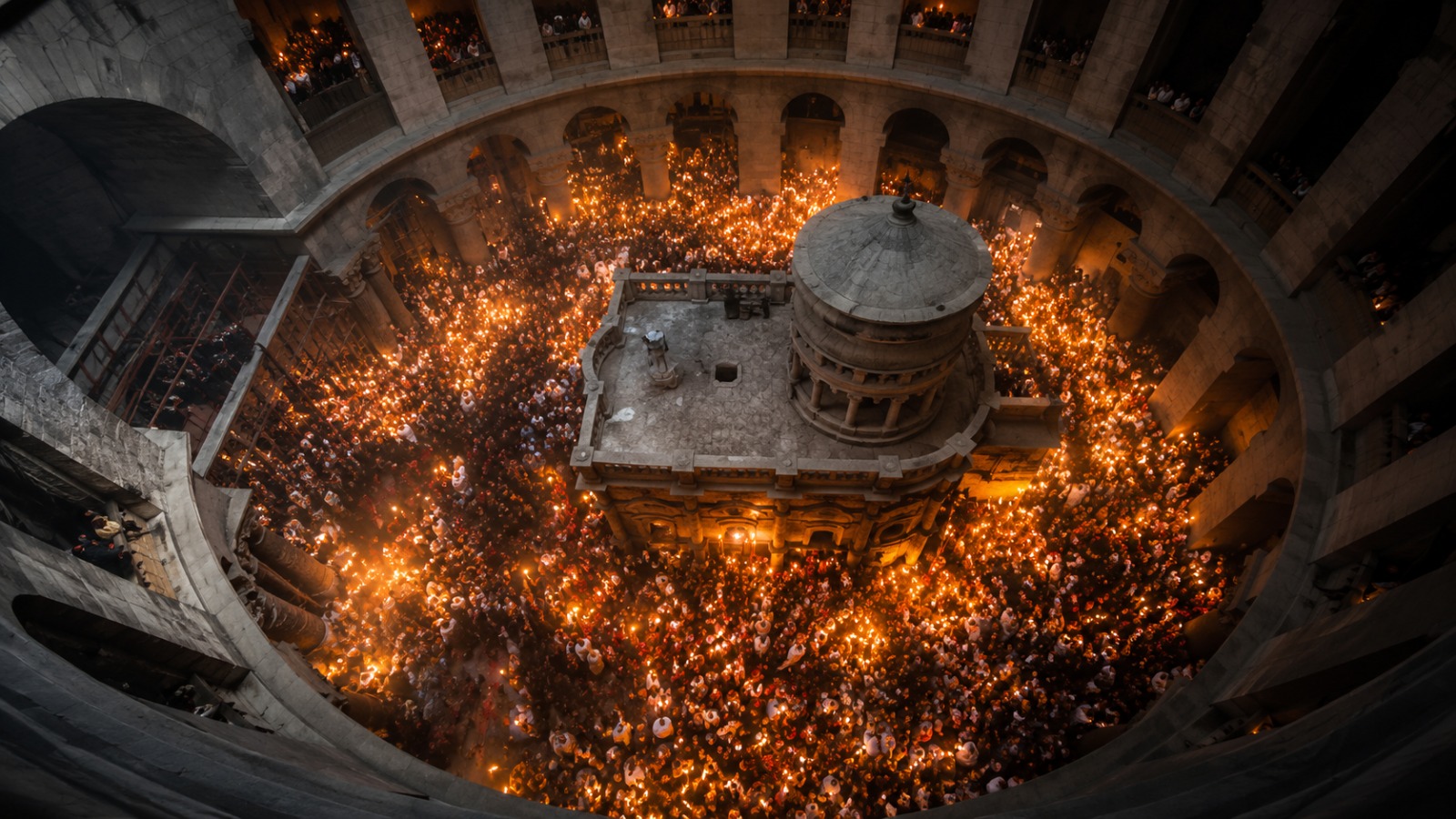
- Christian and Catholic pilgrimage: Forms of pilgrimage and spiritual travel can be seen in journeys to the Vatican and along Europe’s Camino de Santiago. These experiences carry rich cultural and emotional dimensions, but generally have a more individual or contemplative character and operate within a framework that includes tourism and commercial services. This distinguishes them from the mass convergence and extensive popular solidarity witnessed in Karbala.
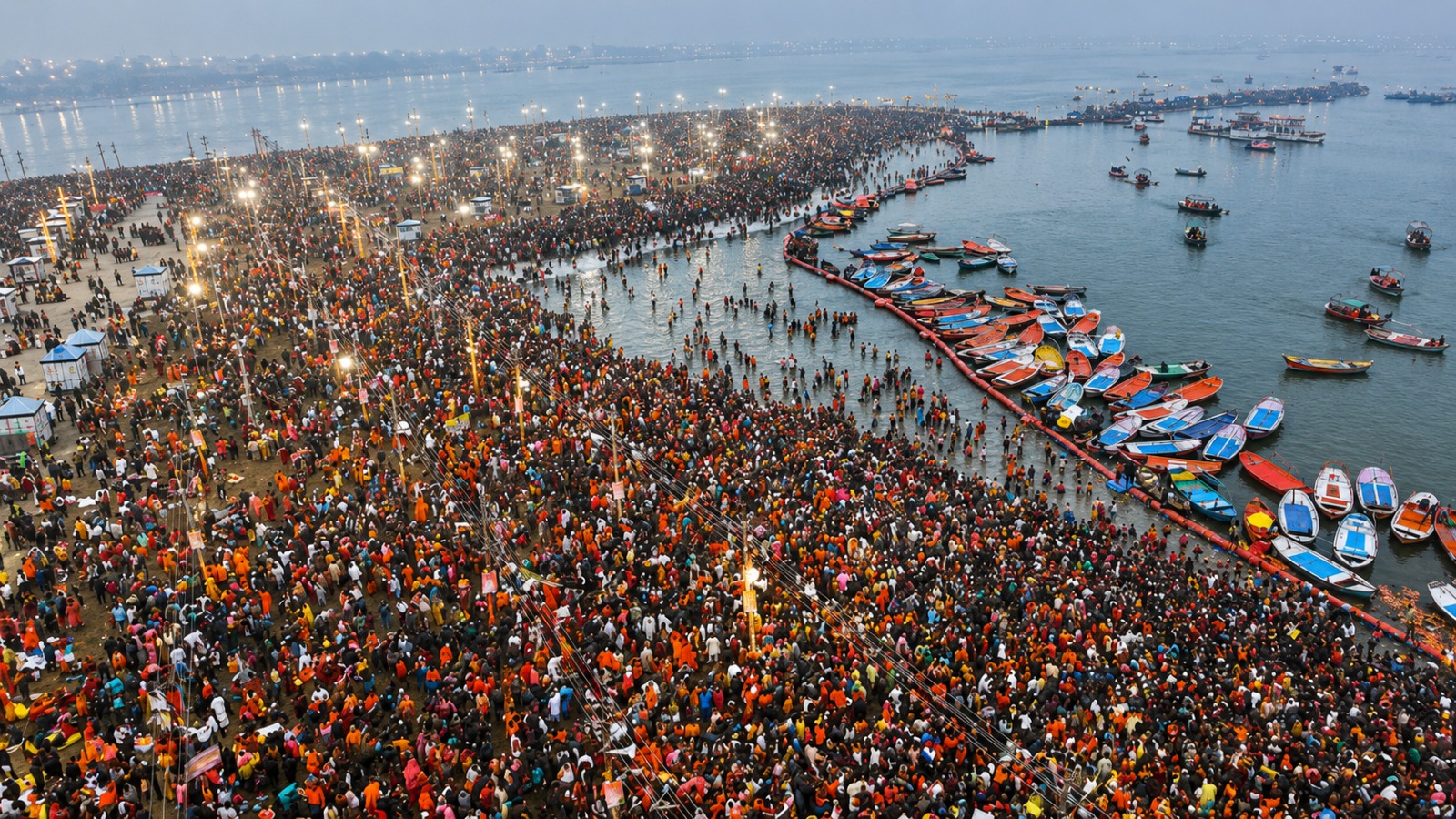
- India’s Kumbh Mela: The Kumbh Mela is the world’s largest Hindu gathering on the banks of the Ganges. It is held at intervals of several years and is concentrated at a fixed location. Arbaeen, by contrast, takes place every year along a moving route stretching across hundreds of kilometres, with services provided entirely free of charge.
Conclusion
The Arbaeen pilgrimage remains a living example of religious and humanitarian mobilization that has endured across centuries. It confronts harsh climatic conditions and complex geopolitical realities while reshaping social relations around generosity and extensive solidarity. It is a space in which theology intersects with geopolitics and culture converges with the economy of giving. Understanding the pilgrimage and the dynamics that sustain it has therefore become an academic and political imperative for grasping the profound transformations taking place in Iraq and across the Middle East.