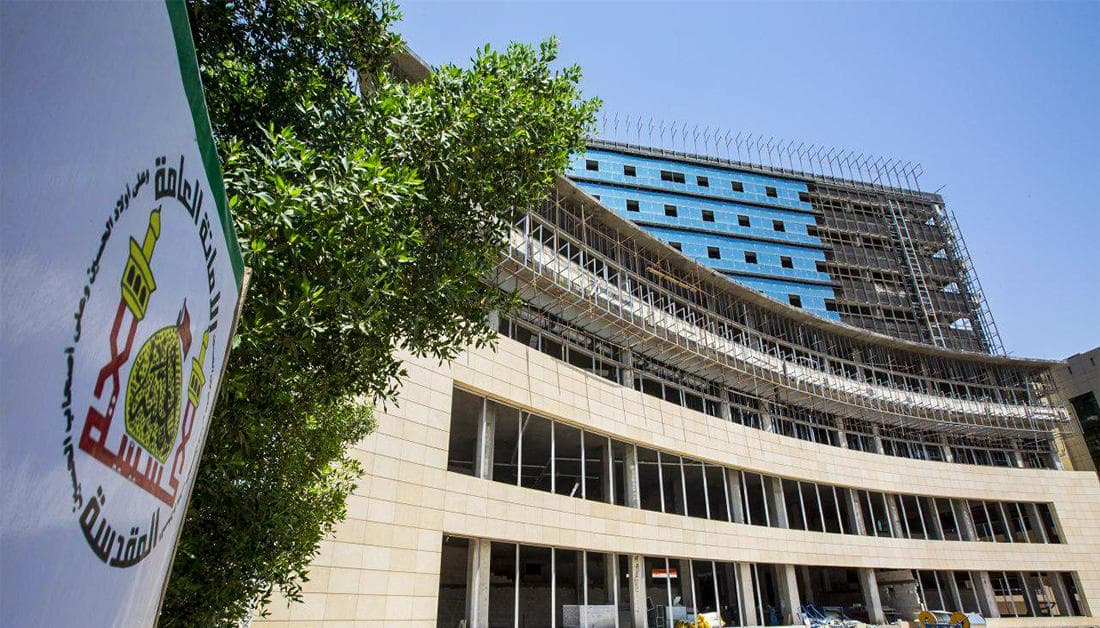
The Al-Hussaini Holy Shrine is pursuing an ambitious vision to strengthen Karbala’s position as a leading medical center in Iraq by expanding its healthcare network and developing its affiliated medical institutions. The initiative seeks to advance healthcare services across the province and establish Karbala as a “City of Healing,” with the aim of providing citizens and visitors with access to more advanced medical care.
The initiative builds on the Al-Hussaini Holy Shrine’s growing involvement in the healthcare sector. Over recent years, its network of specialized medical institutions has expanded, alongside increased investment in modern medical technologies and the provision of free treatment to various groups of patients. In recent statements, the Shrine has emphasized that improving healthcare is among its key objectives, with the development of medical institutions forming part of a broader effort to raise the standard of healthcare services in Karbala.
The current vision also builds on a healthcare and medical education agenda that the Al-Hussaini Holy Shrine has pursued for several years. In October 2024, the Shrine highlighted its efforts to establish Karbala as a “City of Healing and Mercy” for Iraqis, while continuing to expand specialized medical facilities, particularly those dedicated to cancer treatment.
The Shrine’s healthcare network has expanded both in the number of institutions and in the range of medical specialties it provides. Among its facilities are the Warith International Cancer Institute, Imam Al-Mujtaba Hospital for Hematology and Bone Marrow Transplantation, and Imam Zain Al-Abidin Hospital, alongside a number of other medical centers and institutions.
In July 2026, the Health and Medical Education Authority of the Al-Hussaini Holy Shrine announced that its specialized cancer-treatment facilities had provided care to a significant share of children with cancer in Iraq, offering specialized treatment free of charge to children arriving from different provinces. Earlier, in May 2026, the Authority reported that more than 1,000 children had received free medical services in a single month, while its institutions also carried out tens of thousands of medical and laboratory tests and provided radiotherapy and chemotherapy sessions.
The expansion is also being accompanied by the introduction of advanced medical technologies. In February 2026, the Health and Medical Education Authority announced plans to introduce a surgical robotic system and a mobile PET scan unit as part of efforts to strengthen diagnostic and treatment capabilities and expand the use of modern medical technologies.
The initiative also extends to medical education and the development of healthcare professionals through Al-Sibtayn International University of Medical Sciences in Karbala. The university offers programs in medicine, nursing, midwifery, rehabilitation, and physiotherapy, supported by training facilities and medical laboratories. Bringing medical education together with healthcare provision reflects an effort to develop a more integrated system—one that goes beyond treating patients to include professional training and the development of medical expertise.
The expansion of healthcare services is particularly significant for Karbala, a city that receives large numbers of visitors throughout the year, especially during major religious occasions. In response, the Al-Hussaini Holy Shrine has strengthened its field medical capabilities to deal with emergencies and increased patient numbers during pilgrimage seasons, deploying medical teams, health centers, and medical camps while providing ambulance and emergency care services.
Taken together, these projects and statements indicate that the term “City of Healing” refers to a broader vision for strengthening Karbala’s role in healthcare rather than to a standalone urban development project. The vision rests on a network of therapeutic, specialized, and educational institutions, combined with the expansion of healthcare services, the adoption of modern technologies, and the provision of medical care to residents and visitors.
The development also reflects a broader shift in the Al-Hussaini Holy Shrine’s healthcare activities—from responding to emergencies and implementing individual medical initiatives toward building a more comprehensive healthcare system encompassing specialized hospitals, cancer treatment, medical education, advanced diagnostics, professional training, and emergency response. Continued investment in these areas, alongside coordination with government health institutions, could further reinforce Karbala’s position as a center for specialized medical care in Iraq.
In this context, “City of Healing” represents a healthcare vision through which the Al-Hussaini Holy Shrine seeks to expand Karbala’s role in medical care and connect specialized treatment with medical education, modern technologies, and services for residents and visitors. The approach comes as Karbala’s healthcare sector continues to expand its medical institutions and services.