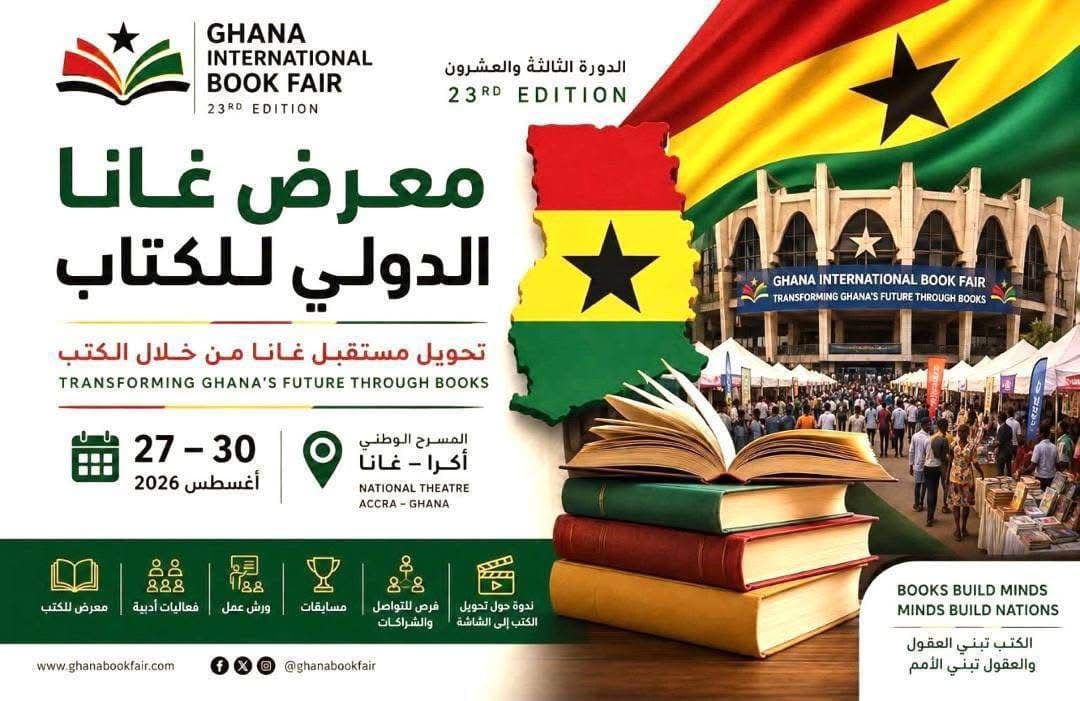
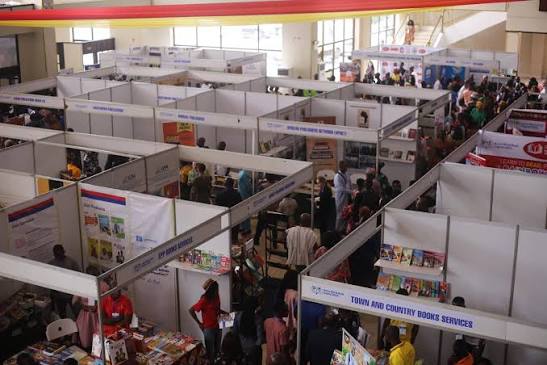
Accra is hosting the final day of the 23rd Ghana International Book Fair today, Sunday, August 30. The four-day event opened on August 27 at the National Theatre under the theme “Transforming Ghana’s Future through Books,” bringing together publishers, writers, cultural and educational institutions, publishing professionals, and readers from Ghana and abroad.
This year’s fair has placed books within a broader conversation about the challenges facing Ghana’s education and cultural sectors. Reading has featured prominently in discussions about children, young people and education, while the publishing industry faces rising production costs and changing patterns of access to content.
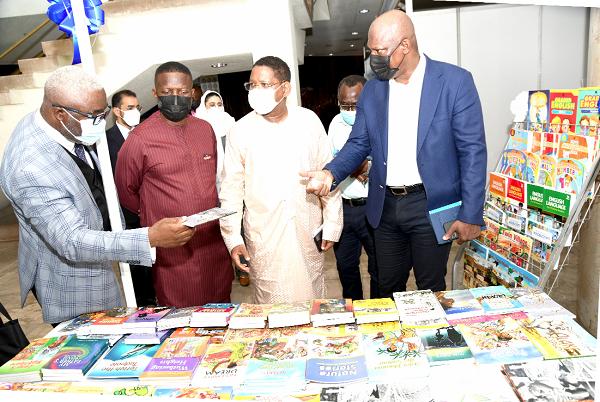
At the opening, official speakers called for reading to become part of everyday life rather than something associated mainly with schools or cultural events. Abla Dzifa Gomashie, Ghana’s Minister of Tourism, Culture and Creative Arts, said encouraging children and young people to read was an investment in the country’s future. Reading, she noted, can strengthen understanding and critical thinking while exposing readers to different ideas and experiences.
Edward Yao Odoom, President of the Ghana International Book Fair, connected the event to the country’s wider future, pointing to knowledge, innovation and creativity as important elements of development. Books were thus presented not simply as cultural products, but as part of the environment in which younger generations form their knowledge and outlook.
First: Taking Reading Beyond the Book Fair
The fair’s activities have also moved beyond the National Theatre. One of its reading initiatives reached Makola Market in Accra, where organisers launched a campaign under the title “Reading with Everyone.” The market was chosen for its busy daily life and its ability to bring the campaign to people who do not usually attend literary events or book fairs.
Traders, workers and shoppers took part in reading activities and spoke with organisers about their relationship with books and the importance of encouraging children to read. The idea was to make reading part of ordinary life rather than an activity confined to schools and libraries.
Second: Children and Reading Competitions
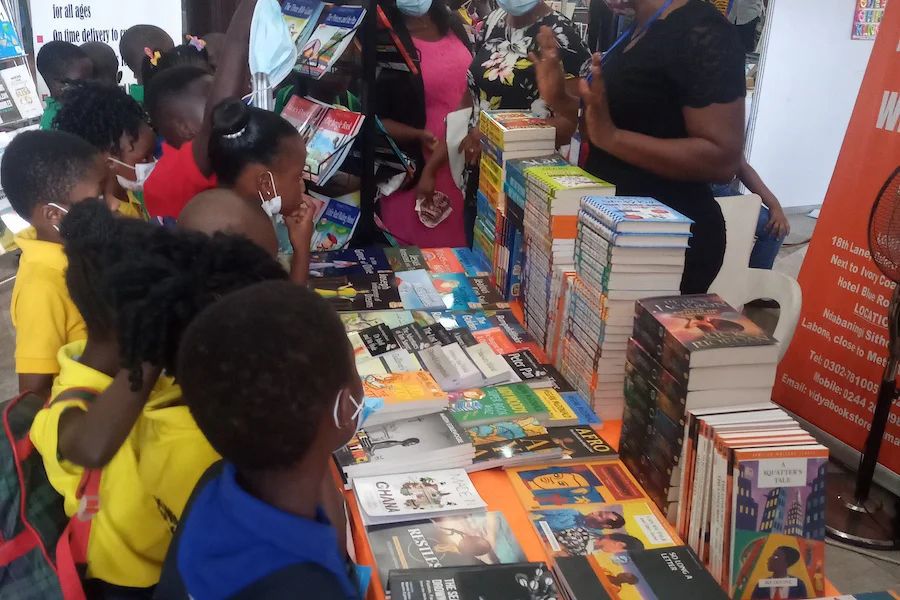
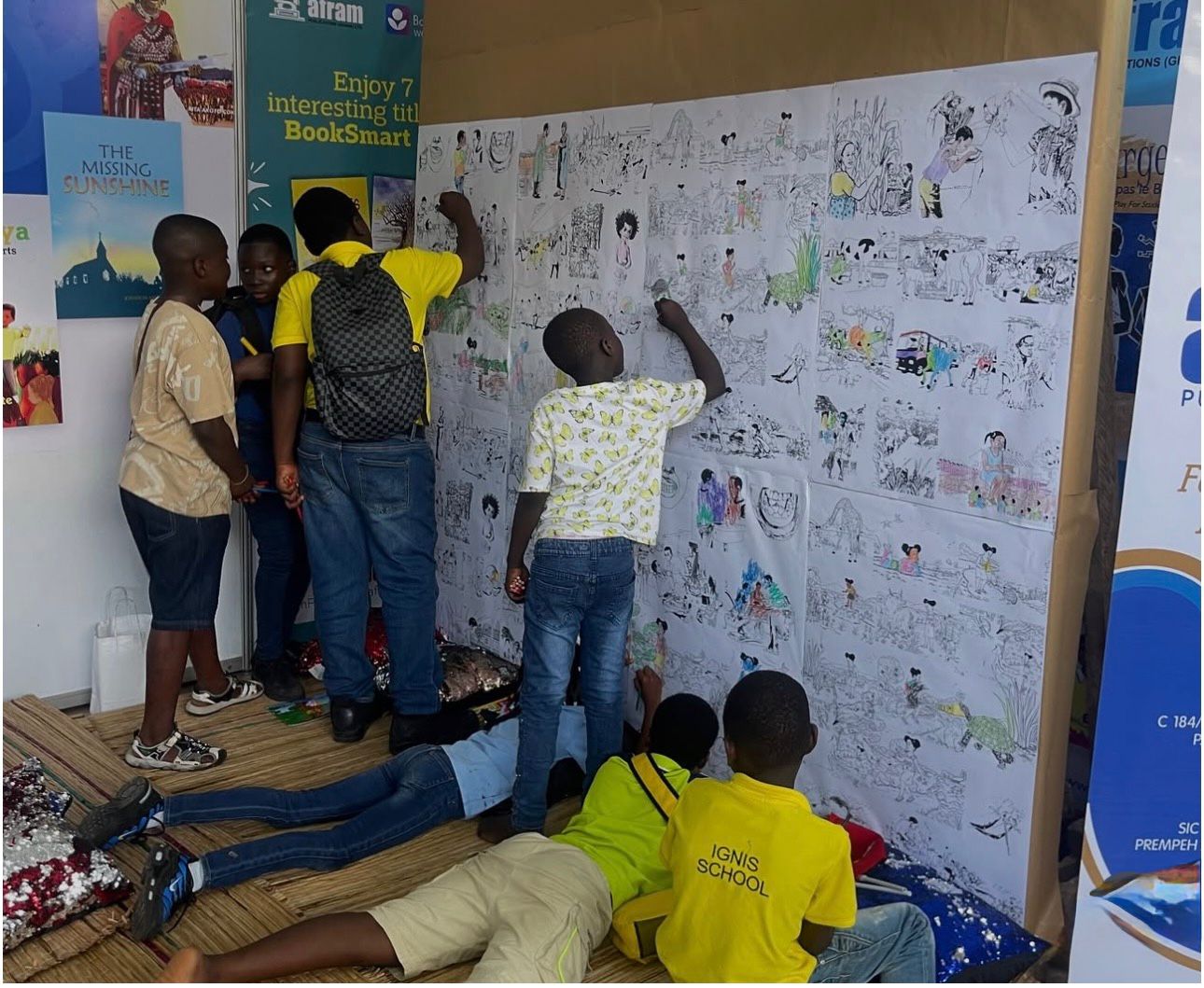
Children and students have also featured prominently in the programme through the launch of the first “Ghana Star Reader” competition. The initiative aims to strengthen reading, comprehension and listening skills in English and Ghanaian languages. Another programme, “Reading with Champions,” gives children the opportunity to read alongside well-known figures from different fields and talk to them about books and their own experiences.
Third: Books, Publishing and New Forms of Content
The fair’s programme has included literary sessions, workshops, forums and competitions, as well as meetings for people working in publishing. Some events have focused on the future of reading and literacy, while others have explored the relationship between books and cinema and the possibility of adapting literary works for the screen.
These activities come as Ghana’s publishing industry contends with a number of difficulties, including the rising cost of producing books, piracy, financing and distribution problems, and declining interest in reading. Digital technology and artificial intelligence are bringing further changes to the sector, altering both the way content is produced and how it reaches audiences.
Fourth: The Fair as a Meeting Point for the Publishing Industry
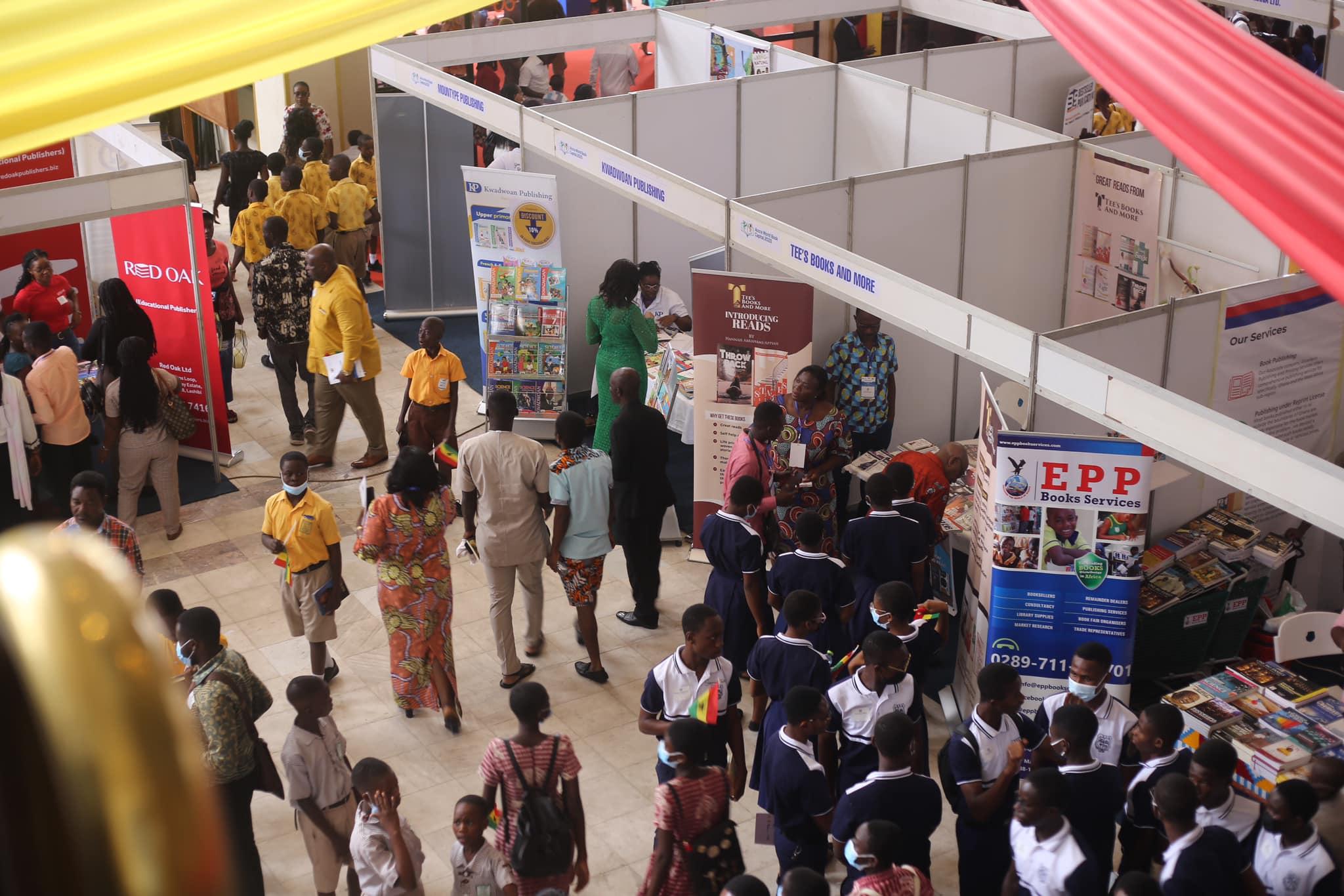
The Ghana International Book Fair is therefore more than an annual book market. It brings authors, publishers, booksellers, libraries, educational institutions and readers together, creating a space to discuss the direction of the publishing industry and ways of reaching a wider audience.
The international presence at this year’s fair also reflects efforts to strengthen ties between Ghana’s publishing industry and cultural sectors and markets in other countries. Participants have come from countries including the United Kingdom, the United States, Canada, India, Nigeria, Kenya and South Africa.
Fifth: What Comes After the Fair?
As the 23rd edition draws to a close, the fair’s message this year is clear: the future of reading will not be determined by how many books are displayed at book fairs, but by the place books occupy in people’s everyday lives. From Makola Market to schools, and from children’s reading competitions to meetings among publishers, the organisers have sought to take books beyond library shelves and into the spaces where people live and work.
For a country seeking to broaden its reading culture and support its publishing industry, the question left by this year’s fair extends beyond the next edition. How can interest in books be sustained once the fair is over, and how can reading become a lasting habit among younger generations?