

Farah Ahmed Al-Hag*
Introduction
Major religious gatherings raise a question that goes beyond direct jurisprudential rulings. The question concerns how a community takes shape and organizes itself. A religious occasion does not take place in a vacuum. It is surrounded by processions, chanting, food, hospitality, transportation, service, and voluntary work. It also often mobilizes family and local networks, as well as civil and religious institutions. Studying such gatherings provides a way to understand how religious memory becomes a collective practice, and how that practice develops into recurring roles and social networks.
This paper does not compare the Mawlid and Arbaeen in terms of jurisprudential legitimacy or the validity of religious belief; each has its own religious frame of reference and historical memory. The comparison is limited to a specific social question: how does a religious occasion generate forms of organization, volunteering, and hospitality? And how do these forms vary according to the spatial and ritual structure of the occasion?
To frame this question, the paper distinguishes between three interconnected levels: the level of religious memory, which gives the occasion its meaning; the level of collective enactment, expressed through processions, walking, celebrations, and service; and the level of social organization, which emerges when roles, rules, and networks are repeated and become capable of being reproduced over time.
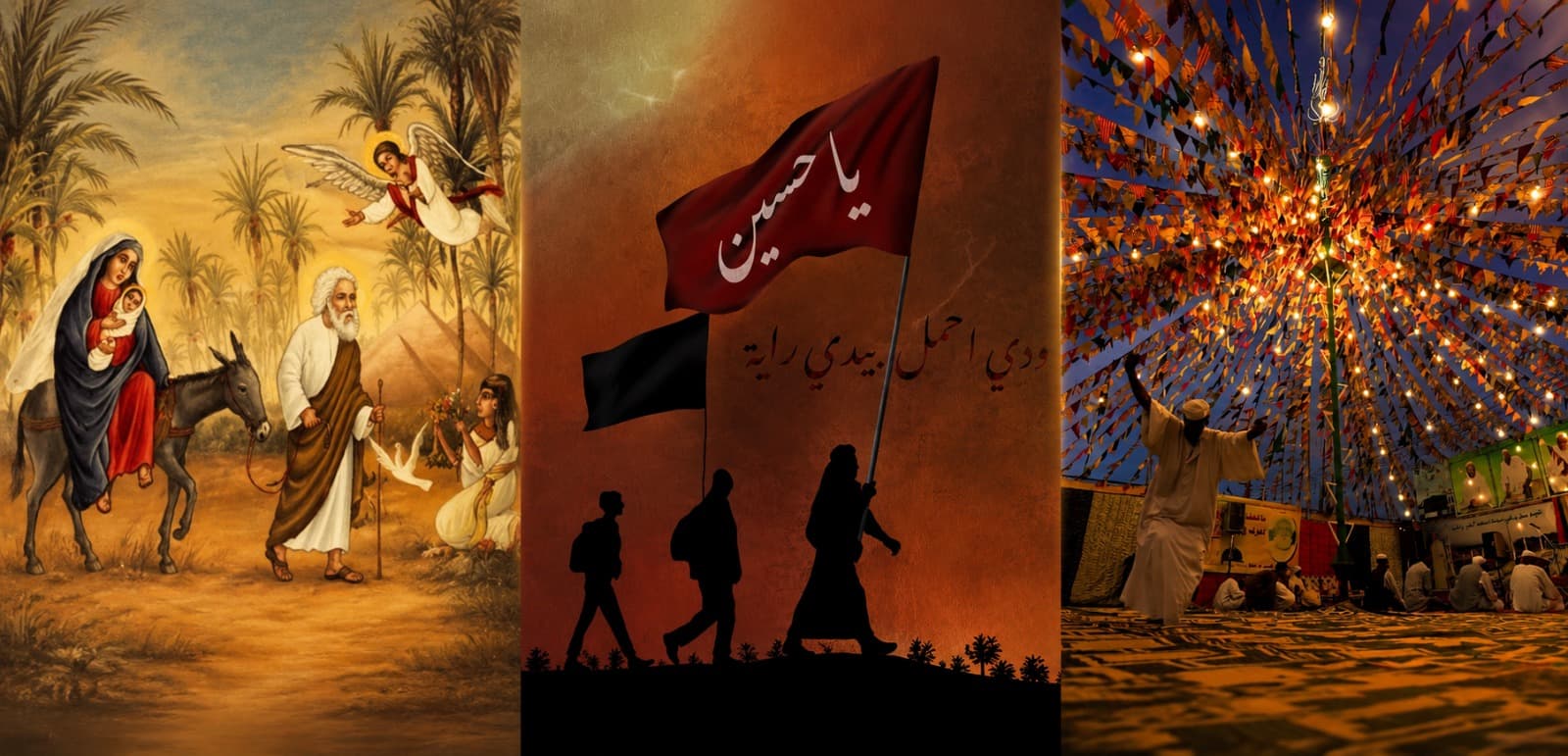
The comparison draws on UNESCO's Representative List of the Intangible Cultural Heritage of Humanity, not as a comprehensive statistical sample, but as documentation files that provide systematic descriptions of three practices: the provision of services and hospitality during the Arbaeen visitation in Iraq; the procession and celebrations of the Prophet Muhammad's Birthday in Sudan; and the festivals related to the Journey of the Holy Family in Egypt.
Conceptual Framework and Central Hypothesis
Both the Mawlid and Arbaeen, in different local contexts, face recurring criticism that characterizes the resources spent on them as “economic waste,” given the scale of resources devoted to food, hospitality, decoration, and processions in societies that already face resource constraints. Such criticism, however, views ceremonial expenditure from a narrow economic perspective, measuring it in terms of consumption and direct monetary saving, while paying less attention to the possibility that these resources may be transformed into other forms of capital.
According to Marcel Mauss's concept of the “gift,” ceremonial giving—from free food to hosting strangers—does not end once the gift has been offered. Rather, it enters a network of moral obligations based on giving, receiving, and reciprocating, and over time contributes to building trust and strengthening relations of reciprocity within the community. This perspective intersects with what sociologists later developed as the concept of “social capital,” which refers to resources generated through relationships, networks, and shared values. Social capital helps communities work together and reduces the costs of social interaction. From this perspective, major celebratory gatherings do not appear to be merely transient moments of consumption, but recurring occasions for rebuilding and renewing some of these networks.
This framework distinguishes between bonding social capital, which strengthens relationships within a given community, and bridging social capital, which connects different groups, networks, and regions, while recognizing that the two overlap to varying degrees in every case. The returns from this accumulation appear in forms that do not readily enter conventional economic calculations, such as community cohesion, the mitigation of polarization, and the creation of mechanisms for mutual assistance. These mechanisms become particularly important in times of crisis, when formal institutions are unable to meet all needs.
The paper does not disregard the direct economic effects of these seasons. The stimulation of confectionery production, handicrafts, transportation, hospitality, and local markets generates seasonal economic activity from which different segments of society benefit. Establishing the scale of this effect, however, requires independent field data. The paper therefore does not seek to prove the profitability of ceremonial expenditure in every case. Rather, it argues that describing all such expenditure as “waste” is analytically incomplete because it overlooks the social and organizational functions that emerge around the occasion and does not readily capture activity within the informal economy or the value of voluntary labor.
The paper's central hypothesis is that differences in the spatial structure of an occasion are reflected in the form of social organization surrounding it: a collective route directed toward a single sacred center in Arbaeen, as opposed to a simultaneous, multicentric celebration in the Sudanese Mawlid. The Egyptian case is used to test the flexibility of this distinction as an analytical spectrum rather than a closed classification.
Section One: The Mawlid in Sudan — Synchronization and Multicentricity
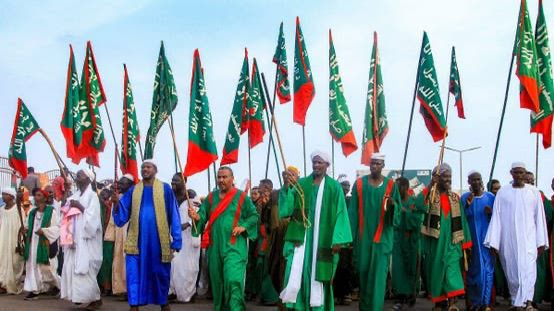
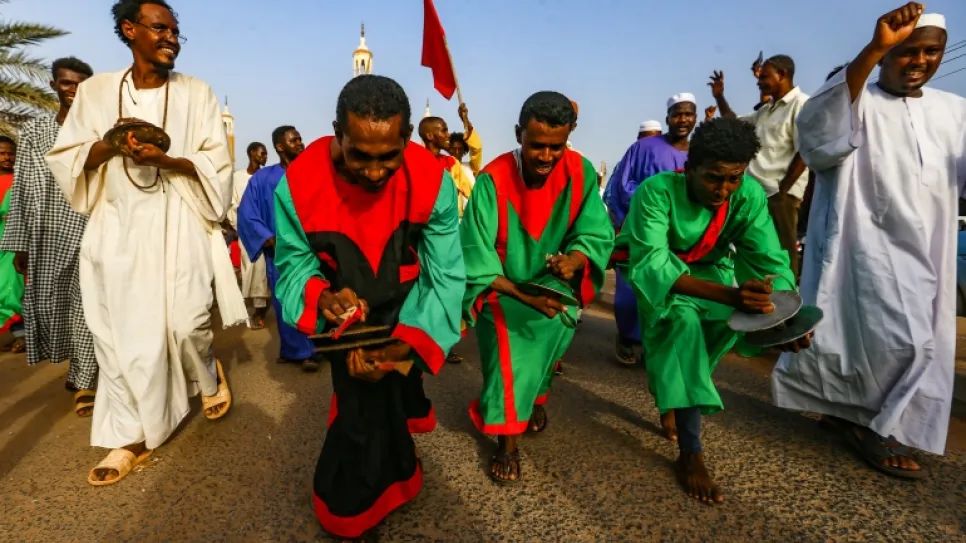
The spatial structure of the Mawlid in Sudan differs markedly from the Arbaeen model. In 2023, UNESCO inscribed “Procession and Celebrations of Prophet Mohammed's Birthday in Sudan.” According to the inscription file, the celebration begins twelve days before the Mawlid and includes processions involving men, women, children, and community leaders, as well as religious and Sufi chants, ritual dances, and a culmination of the celebration in the Mawlid square. The practice is also transmitted within families and circles of devotional singing through participation and teaching. This shows that the continuity of the occasion does not depend solely on the gathering of participants at a particular moment, but also on the transmission of experience and its social reproduction.
The key analytical difference is that the Mawlid does not require all participants to travel to a single sacred center in the manner of the journey to Karbala. There are multiple local centers of celebration, and different groups can observe the occasion within their own local settings at the same religiously designated time. The structure can therefore be described as multicentric and celebratory rather than as a linear ritual procession. Multicentricity does not imply an absence of movement or organization. Rather, it means that the unity of the occasion is formed through synchronization, shared memory, and similar rituals, rather than through the arrival of all participants at the same place. The Sudanese UNESCO file also reflects the presence of different social groups, Sufi orders, vendors, and artisans, showing that the occasion functions as a social, economic, and cultural space alongside its devotional dimension.
Benedict Anderson evokes this type of synchronization when he links the formation of imagined communities to temporal simultaneity achieved through a shared medium such as a calendar or the media, rather than necessarily through direct spatial encounter. The paper does not adopt this concept in its original sense, which is associated with nationalism, but uses it in a limited way to understand how temporal synchronization can contribute to a sense of belonging even in the absence of a single spatial gathering. From this perspective, social capital in the Mawlid model can be understood as more closely connected to the repetition of relationships within local centers, while also allowing for bridging ties among different cities and groups. This does not mean that the Sudanese model is less collective than Arbaeen. Rather, collectivity is produced through a different spatial mechanism: synchronized celebration rather than shared movement.
Section Two : The Arbaeen Visitation — From Memory to Procession
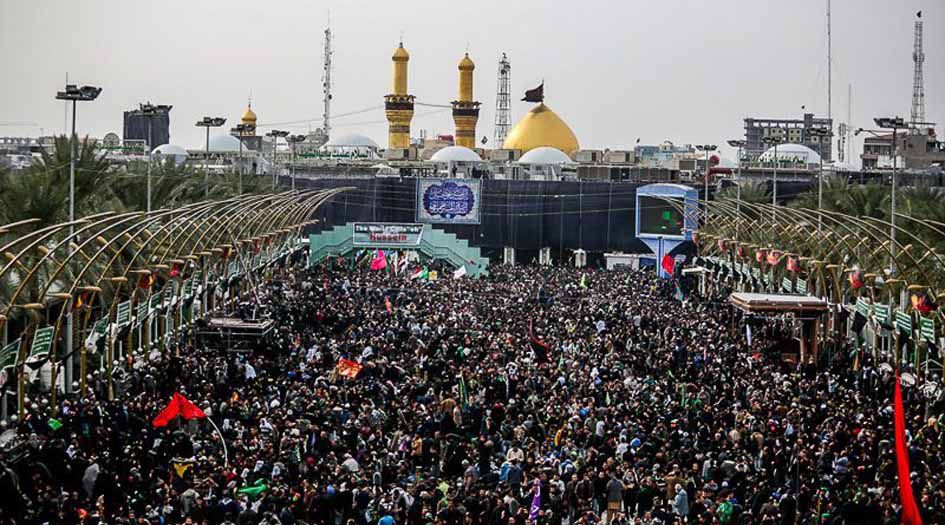
The Arbaeen visitation takes place within the Shi'a memory associated with the martyrdom of Imam Hussein ibn Ali at Karbala on the tenth of Muharram in 61 AH, followed by the twentieth of Safar, regarded as the fortieth day after the event. The periodic visitation, particularly the practice of walking to Karbala in the modern period, has become one of its most prominent collective forms. It can therefore no longer be understood solely through the moment of arrival. The journey itself has become part of the religious and social experience, while the services extending along the route have become a fundamental element of the structure of the occasion.
The origins of the visitation in Shi'a memory are connected to two levels. The first concerns the visit of the Companion Jabir ibn Abdullah al-Ansari and Atiyya al-Awfi to the grave of Imam Hussein on the twentieth of Safar. This is an early account to which Shaykh al-Tusi attributes the recommendation of visiting on this day in Misbah al-Mutahajjid, and which Ibn Tawus likewise records in Iqbal al-A'mal. The second concerns the account circulating within the Husayni narrative of the return of the captives of the Prophet's family from Syria and their passage through Karbala on the same day, where they encountered Jabir. This account gives the visitation an additional meaning: the return of the Prophet's family to the site of the tragedy and their encounter with its aftermath through remembrance and mourning.
An academic treatment requires a distinction between the presence of this account in religious memory and establishing it as an agreed historical event. The timing of the captives' return to Karbala on the twentieth of Safar remains contested within the Shi'a tradition itself, rather than only outside it. Sayyid Muhammad Ali Qadi Tabataba'i devoted an entire book to defending and investigating the historicity of this return, both in terms of its chains of transmission and its chronology. Martyr Morteza Motahhari, by contrast, argued that the account appears only in Ibn Tawus's Luhuf, without an authenticated source being cited for it, leading him to withhold acceptance of it as an established historical eventii[vi]. This disagreement between two prominent scholars within the Shi'a tradition itself demonstrates that distinguishing religious memory from critical historical fact is not an external challenge to the ritual. Rather, it forms part of an internal critical tradition maintained by Shi'a scholars of hadith, as reflected, for example, in the efforts of al-Muhaddith al-Nuri to scrutinize and classify reports according to their chains of transmission. Accordingly, this paper presents the account as a pillar of Husayni memory that gives the visitation its meaning, rather than as an uncontested historical event. This distinction does not diminish its place in collective memory. Instead, it preserves the significance of oral and pulpit-based Husayni narratives as material for the study of religious memory, while maintaining the necessary distinction between them and critical historical sources.
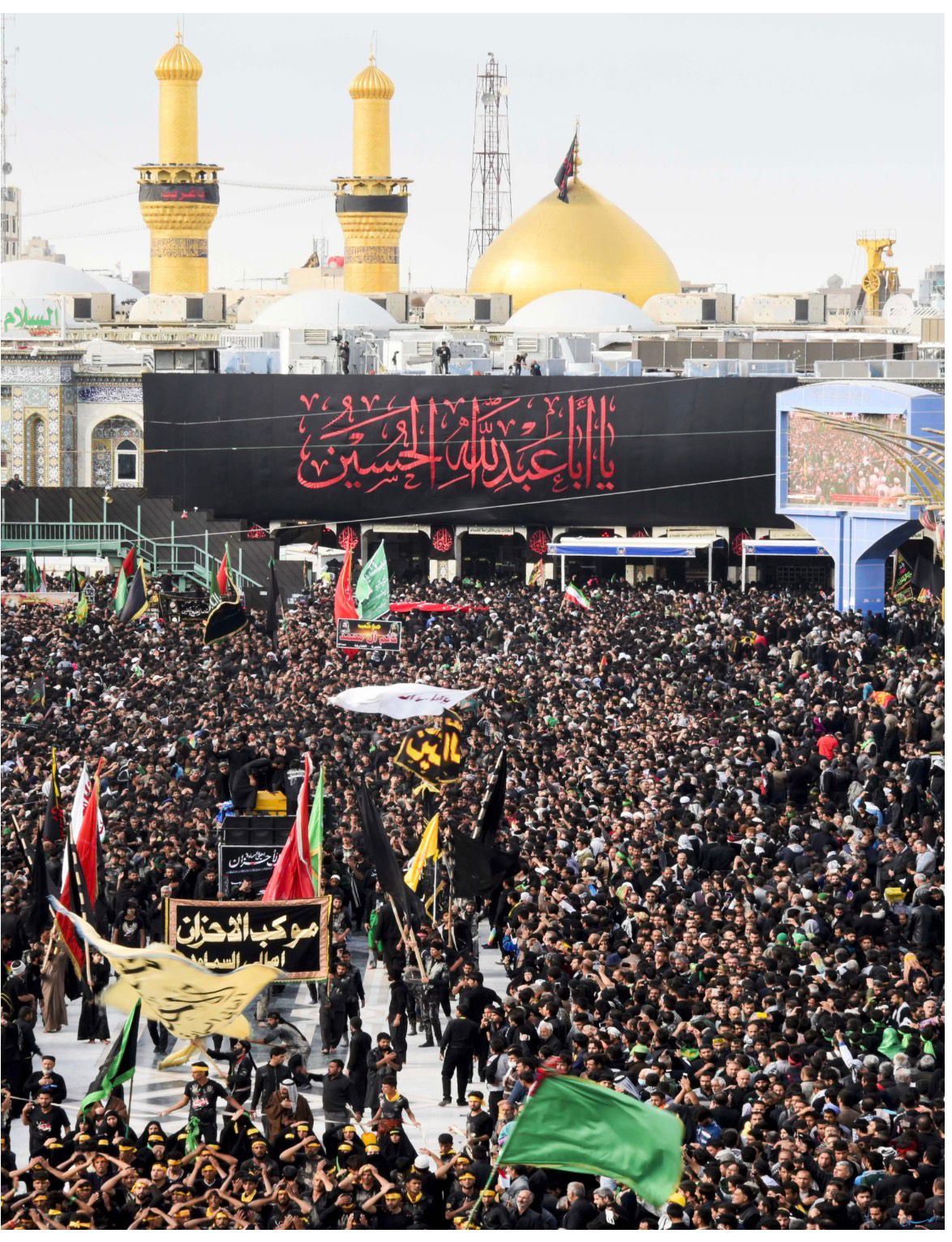
In its contemporary form, the Arbaeen visitation is characterized by a geographical structure with a clearly defined center: Karbala, toward which routes from multiple areas converge. UNESCO describes the practice as a gathering in which processions of visitors set out from central and southern Iraq and travel toward Karbala, with services distributed along the pilgrimage routes. From the sociology of ritual perspective, the journey is not merely a means of transportation. It becomes a dense social space in which movement, devotion, hospitality, social interaction, and voluntary work intersect.
According to Van Gennep and Turner's model of ritual stages—separation, liminality, and incorporation—“liminality” in the case of Arbaeen is not confined to the moment of arrival in Karbala. The road itself becomes part of the ritual state. Here, Turner's concept of Communitas provides a more precise analytical tool for understanding what takes place along the route. According to Turner, the liminal state temporarily suspends the ordinary social structure, with its hierarchies and functions, and replaces it with an egalitarian human bond not based on rank. This is precisely what appears in the scene of pilgrims walking toward Karbala: a doctor walks alongside a farmer; a wealthy person provides services to someone with nothing; feet are washed, while beds and food are provided without regard to social status, occupation, or even nationality. Service and walking together temporarily suspend ordinary class distinctions throughout the journey, making the road itself—not Karbala alone—a space of temporary equality of the kind Turner described as characteristic of liminality in major collective rituals. This temporary equality does not disappear when the journey ends. It leaves an imprint on collective memory that is recalled and experienced anew each season.
A clear relationship thus emerges between center and periphery: Karbala is the symbolic point of attraction, while circles of service and hospitality spread along the routes, functioning as intermediary institutions that produce social capital successively. Each service procession represents one link in a broader chain connecting villages, cities, and multiple communities to a single destination. It is therefore possible to speak of cross-regional bridging social capital, while bonding social capital remains present within each family, procession, or association.
In 2019, UNESCO inscribed “Provision of Services and Hospitality during the Arbaeen Visitation” in Iraq, rather than “Arbaeen” itself as a doctrine or ritual in its own right. The practice includes voluntary kitchens, the provision of water and food, temporary facilities, opening homes to visitors, medical teams, guides, and donors. The significance of this inscription lies in the fact that the international committee described the practice as a social institution connected to a religious event and pointed to its role in fostering intercultural and international connections, solidarity, and the redistribution of wealth. Arbaeen thus becomes a clear example of the transition from ritual to social institution: memory generates participation, repeated participation generates roles, and recurring roles generate relatively stable networks.
This structural difference helps partially explain the difference in the nature of the element documented internationally in the two files. When a major aspect of a phenomenon is linked to serving a long route connecting multiple points and ending at a single destination, as in Arbaeen, it becomes understandable that UNESCO's formulation would focus on “service and hospitality” as the element documented and safeguarded. This observation should not be turned into an established causal relationship. UNESCO did not state that the linear structure of Arbaeen led to the selection of services as the subject of inscription. Rather, the paper proposes that the difference in the nature of the documented element can be read, in part, in light of the structural difference between the two practices.
Section Three: Egypt — Festivals Related to the Journey of the Holy Family
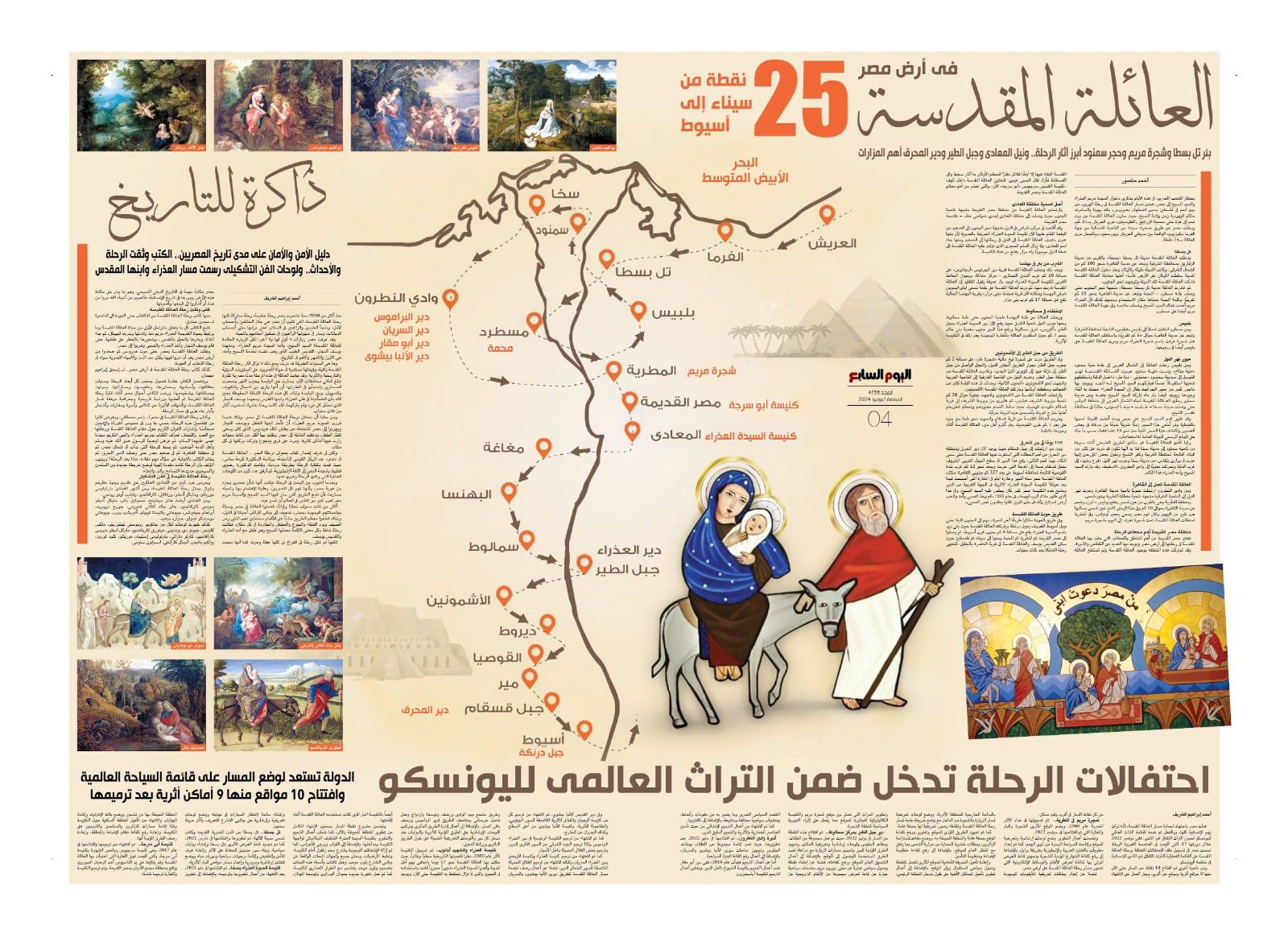
The Egyptian case enters the comparison as a composite case with its own distinctive characteristics. In 2022, UNESCO inscribed “Festivals Related to the Journey of the Holy Family in Egypt.” The practice combines local celebrations, visitor movement, voluntary services, and gift exchange, with joint participation by Muslims and Copts. The inscription document indicates that local residents provide these services to visitors at sites associated with the Holy Family's journey, making the Egyptian case useful for understanding a different form of religious and cultural gathering that combines movement, celebration, and service.
This case demonstrates that a single occasion may combine more than one organizational pattern: a local celebratory center, movement by visitors between sites, services and hospitality, and interaction between two different religious communities. The Egyptian case should therefore not be understood as a literal “middle point” between Arbaeen and the Mawlid. Instead, it serves as a test of the robustness of the proposed binary, showing that centrality, movement, synchronization, and volunteering can coexist to varying degrees within the same occasion. The distinction between “multicentric” and “processional” should consequently be treated as an analytical spectrum along which cases may be positioned according to the degree of pilgrimage or visitation centrality, the extent of collective movement, the degree of celebratory synchronization, and the stability of service and volunteer networks, rather than as a closed binary classification.
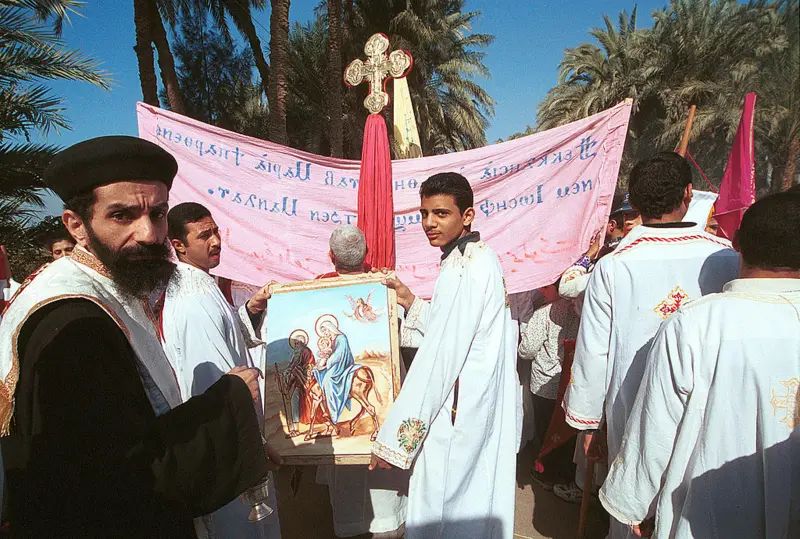
The Egyptian case also adds a dimension concerning coexistence and participation across religious affiliations. It demonstrates that the production of social relationships does not depend solely on a shared religious frame of reference. It can also be connected to repeated participation in a shared cultural tradition, as well as to service, interaction, and collective memory among different communities.
Comparative Discussion: From Religious Practice to Social Institution
The explanatory model proposed here can be tested for its robustness by expanding the binary comparison into a three-case comparison that adds Egypt to the Sudanese Mawlid and Iraqi Arbaeen. Regardless of where each case falls on the “multicentric/processional” spectrum, a common theoretical conclusion can be tested across all three cases: the transition of collective religious practice from a recurring event into a social framework that organizes volunteering and solidarity, preserves heritage, and transmits experience. This transition does not appear to be confined to any particular sect or religious community. The three internationally documented cases in Sudan, Iraq, and Egypt offer different examples of the capacity of religious occasions to generate forms of social organization that extend beyond the immediate devotional practice, despite the differences in the doctrinal frameworks underlying each case.
The point at which a religious practice moves from a recurring occasion to a social institution can be understood through four interconnected levels. The process begins with shared memory: the story or symbol that gives participation a meaning extending beyond the act itself—the memory of the Prophet's Birthday in the Sudanese case, and the memory of Imam Hussein's martyrdom and visitation in the Iraqi case. Collective enactment follows, when memory is no longer confined to the mental realm but is transformed into processions, walking, food, chanting, service, and human gatherings. Repetition then allows experience to accumulate as the occasion recurs periodically, enabling people to know what the event requires and who performs each role. Finally, social organization emerges as accumulated experience produces more stable roles, networks, and rules. At this point, the occasion approaches the concept of a social institution.
This process can be summarized as follows: religious memory leads to collective practice, then to repetition, organization, volunteering and social networks, and ultimately to social capital and community institution. This sequence should not be understood as an inevitable social law. Not every religious practice necessarily develops into an institution. Such a transformation occurs when roles, resources, experience, and rules of cooperation accumulate around it.
Limits of the Comparison and Prospects for Further Research
This comparison must acknowledge its limitations because the Mawlid and Arbaeen are not identical phenomena in terms of religious framework, history, or ritual. The first limitation is that the comparison does not place the Sunni-Sufi occasion and the Shi'a occasion within a single doctrinal framework; the differences in religious meaning and historical significance are fundamental and cannot be set aside. The second is that UNESCO inscription does not constitute a statistical sample of religious occasions across the Muslim world. Rather, these are elements selected by the states and communities concerned for inscription under the mechanisms of the Convention for the Safeguarding of the Intangible Cultural Heritage.
The third limitation is that the available evidence does not permit a quantitative measurement of the volume of social capital, nor does it establish a direct causal relationship between celebration and social cohesion. The paper instead offers an explanatory framework that can be tested through subsequent field studies. The fourth is that judging ceremonial expenditure as either “waste” or “benefit” cannot be settled theoretically alone. Establishing any economic impact requires data on expenditure, employment, markets, transportation, and the monetary value of voluntary labor. These limitations do not weaken the paper. Rather, they define its scope more precisely as a comparative sociological-anthropological study, rather than a quantitative economic study or a jurisprudential one.
Conclusion
This paper proposes that viewing the Mawlid and Arbaeen as social phenomena open to comparative analysis provides a broader field of understanding than reducing them to a binary jurisprudential question or evaluating them solely through the concept of “economic waste.” A sociological approach makes it possible to examine what happens around these occasions as part of broader social processes connected to the building of social peace, the safeguarding of intangible cultural heritage, the stimulation of certain forms of seasonal local economic activity, and the use of social capital accumulated within these gatherings and periodically renewed by the occasion.
The comparison shows that collective religious occasions do not produce a single form of social organization. In the case of Arbaeen, an important part of the organization is connected to collective movement toward a sacred center and to the network of services distributed along the visitation routes. In the Sudanese Mawlid model, by contrast, the procession and collective celebration within synchronized local centers are more prominent. This should not be understood as a sharp division between two models, but as a difference in the degrees of centrality, movement, synchronization, and the organization of service. The Egyptian case likewise demonstrates that the boundaries between these patterns are not rigid. The festivals related to the Journey of the Holy Family combine celebration, movement, service, volunteering, and social exchange, suggesting that a religious occasion may embody more than one organizational pattern at the same time.
This does not mean overlooking the profound differences between the memory of the Mawlid and the memory of martyrdom. The doctrinal framework and historical significance of each are clearly distinct. Yet these differences do not prevent the existence of a shared social question: how do people seek belonging to an entity that transcends the self, and how do they, through hospitality, solidarity, and collective participation, rebuild the ties that connect members of a community to one another? From precisely this perspective, these occasions become a legitimate subject for the comparative sociology of religion—not an exception confined to jurisprudential debate, but a social phenomenon that reveals, in moments of intense collective participation, how communities take shape, preserve their memories, transmit their experiences, and reproduce their internal ties. The paper's central finding can therefore be summarized in a single statement: a religious occasion does not become a social institution simply because it brings people together; it does so because, over time, it creates around shared memory a system of roles, networks, volunteering, and resources that is reproduced from one generation to the next.
References
Mauss, Marcel. Essai sur le don: forme et raison de l'échange dans les sociétés archaïques. L'Année sociologique 1 (1925): 35–95.
Bourdieu, Pierre. “The Forms of Capital.” In Handbook of Theory and Research for the Sociology of Education, edited by John G. Richardson, 241–58. New York: Greenwood Press, 1986.
Putnam, Robert D. Bowling Alone: The Collapse and Revival of American Community. New York: Simon & Schuster, 2000.
Al-Tusi, Abu Ja'far. Misbah al-Mutahajjid wa-Silah al-Muta'abbid. Beirut: Mu'assasat Fiqh al-Shi'a, 1411 AH.
Ibn Tawus, Ali ibn Musa. Iqbal al-A'mal bi-Salah al-A'mal. Tehran: Dar al-Kutub al-Islamiyya, 1409 AH.
Tabataba'i, Muhammad Ali Qadi. Tahqiq darbare-ye Avalin Arbaeen-e Hazrat-e Sayyed al-Shuhada [Research on the First Arbaeen of Imam Hussein]. Tehran: Maktaba al-Sadr, 1341 SH.
Motahhari, Morteza. Al-Malhama al-Husayniyya. Arabic translation. Beirut: Dar al-Ta'aruf, n.d.
Al-Nuri al-Tabarsi, Hussein. Mustadrak al-Wasa'il wa-Mustanbat al-Masa'il. Qom: Mu'assasat Al al-Bayt li-Ihya' al-Turath, 1408 AH.
UNESCO. “Provision of Services and Hospitality during the Arbaeen Visitation.” Representative List of the Intangible Cultural Heritage of Humanity, no. 01474. Paris: UNESCO, 2019.
Van Gennep, Arnold. Les rites de passage. Paris: Émile Nourry, 1909.
Turner, Victor. The Ritual Process: Structure and Anti-Structure. Chicago: Aldine, 1969.
UNESCO. “Procession and Celebrations of Prophet Mohammed’s Birthday in Sudan.” Representative List of the Intangible Cultural Heritage of Humanity, no. 01896. Paris: UNESCO, 2023.
Mabrur, Muhamad Shofwan, Ahmad Dou, and M. Bintang Fadhlurrahman. “The Mawlid Tradition of Muhammad in Sudan.” IBDA’: Jurnal Kajian Islam dan Budaya 21, no. 2 (2023). https://doi.org/10.24090/ibda.v21i2.7153.
Anderson, Benedict. Imagined Communities: Reflections on the Origin and Spread of Nationalism. Rev. ed. London: Verso, 1991.
UNESCO. “Festivals Related to the Journey of the Holy Family in Egypt.” Representative List of the Intangible Cultural Heritage of Humanity, no. 01700. Paris: UNESCO, 2022.
Husein, UmmeSalma Mujtaba. “A Phenomenological Study of Arbaeen Foot Pilgrimage in Iraq.” Tourism Management Perspectives 26 (2018): 9–19. https://doi.org/10.1016/j.tmp.2017.11.015.
Nikjoo, Adel, Neda Razavizadeh, and Michael A. Di Giovine. “What Draws Shia Muslims to an Insecure Pilgrimage? The Iranian Journey to Arbaeen, Iraq during the Presence of ISIS.” Journal of Tourism and Cultural Change 19, no. 5 (2021): 606–27.
* Farah Ahmed Al-Hag: Translation student and research assistant, Cairo University