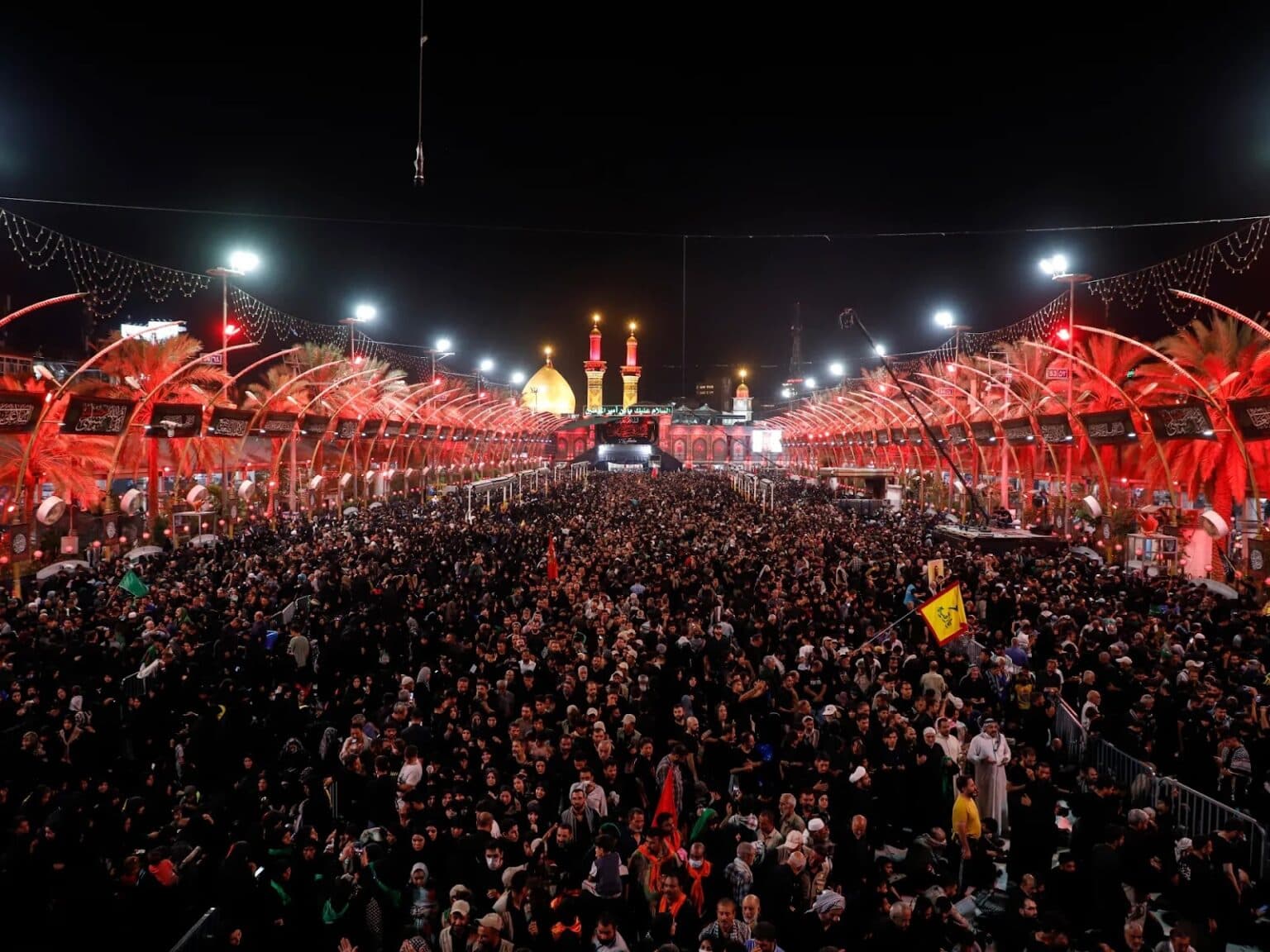
The Arbaeen Pilgrimage is one of the most important religious occasions observed by Shia Muslims. It is commemorated annually on the twentieth day of the Islamic month of Safar, marking forty days after the martyrdom of Imam Hussein ibn Ali, the grandson of the Prophet Muhammad, during the Battle of Karbala in 61 AH (680 CE). On this occasion, millions of pilgrims travel to the Iraqi city of Karbala to visit the shrine of Imam Hussein and the shrine of his brother, Al-Abbas ibn Ali, making it one of the largest annual religious gatherings in the world.
The pilgrimage is directly linked to the Battle of Karbala, one of the defining events in Islamic history. Imam Hussein, together with members of his family and companions, was killed on the tenth day of Muharram, known as Ashura, after refusing to pledge allegiance to the Umayyad Caliph Yazid ibn Mu'awiya. Among Shia Muslims, this event occupies a central place in religious and historical memory and is widely regarded as a symbol of sacrifice, justice, and steadfastness in defending moral principles.
The occasion is known as "Arbaeen," meaning "forty," because it is observed forty days after Imam Hussein's martyrdom. The twentieth day of Safar marks the completion of this mourning period. During the pilgrimage, visitors gather at Imam Hussein's shrine in Karbala to perform religious rites, recite supplications, and commemorate the events of Karbala.
The Arbaeen Pilgrimage holds exceptional religious significance within Shia Islam and is regarded as one of its most important annual observances. This status is supported by religious traditions preserved in Shia heritage. Historical accounts also attribute to the Companion Jabir ibn Abdullah al-Ansari the distinction of being the first person to visit Imam Hussein's grave forty days after his martyrdom. Although historians differ on certain details of this account, it remains an important part of the pilgrimage's historical legacy.
Many pilgrims begin their journey to Karbala several days before Arbaeen. A large number choose to travel on foot, covering long distances from different parts of Iraq, while others arrive after traveling from abroad. Walking to Karbala has become one of the pilgrimage's most recognizable traditions, although many participants also use various means of transportation to reach the holy city.
During the days of the pilgrimage, thousands of service camps, commonly known as mawakib, are established along the roads leading to Karbala. These camps provide pilgrims with free meals, drinking water, accommodation, medical assistance, and guidance services. Most of these services rely on voluntary efforts by individuals, charitable organizations, and religious institutions from both Iraq and abroad.
Participation in the Arbaeen Pilgrimage is not limited to Iraqi citizens. Every year, pilgrims from dozens of countries across Asia, Africa, Europe, and the Americas travel to Karbala, giving the pilgrimage an international dimension in addition to its religious significance. Estimates indicate that Arbaeen is among the world's largest annual religious gatherings, although the reported number of participants varies depending on the methodology and the institutions responsible for counting pilgrims.
The pilgrimage has undergone significant historical changes over the past decades. During the rule of Iraq's former Ba'ath regime, restrictions were imposed on the observance of Arbaeen, and in some periods the pilgrimage was prohibited. Following the political changes of 2003, however, the event experienced a remarkable revival, with participation increasing substantially alongside the expansion of services and organizational efforts.
Arbaeen takes place in the city of Karbala, home to the shrines of Imam Hussein and his brother Al-Abbas ibn Ali, two of the holiest sites for Shia Muslims. During the pilgrimage season, the city and the roads leading to it receive millions of visitors, while Iraqi authorities and the holy shrines coordinate crowd management and essential services to facilitate the event.
Today, the Arbaeen Pilgrimage continues to preserve its religious and historical significance as an annual commemoration held forty days after the martyrdom of Imam Hussein. Rooted in a tradition that spans centuries, it has become one of the most prominent religious occasions in the Islamic world, drawing millions of pilgrims from across the globe to the Iraqi city of Karbala.