Arabic in West Africa: A Language Confronting Marginalization and Searching for Its Future
How the Afrabia Center reopened the debate on the status of Arabic in Côte d’Ivoire and its future between education, culture, and identity
The struggle over the Arabic language in West Africa is not simply a struggle over words or school curricula. It is part of a deeper contest over memory, identity, and the place of knowledge in societies whose cultural and educational structures have been reshaped by political and colonial transformations. For centuries, Arabic was associated with trade, scholarship, writing, and communication among West African communities. With the advent of colonial rule, however, it encountered a new reality in which many of its functions were curtailed, and its broad role as a language of knowledge narrowed, in many settings, to the sphere of religious education.
In Côte d’Ivoire, the issue is even more complicated. Arabic has not disappeared from society, but it has continued to search for a new place within an educational and institutional system dominated by the Francophone model. At the same time, Arabic schools, religious institutions, associations, and communities have preserved its presence, while recent developments point to a gradual move into universities and the wider cultural sphere. The academic material accompanying the session indicates that the opening of the first Arabic language department at a public university in Bondoukou in June 2025 marked a significant step in this process, after decades in which Arabic education had been more closely associated with religious institutions and community-based education.
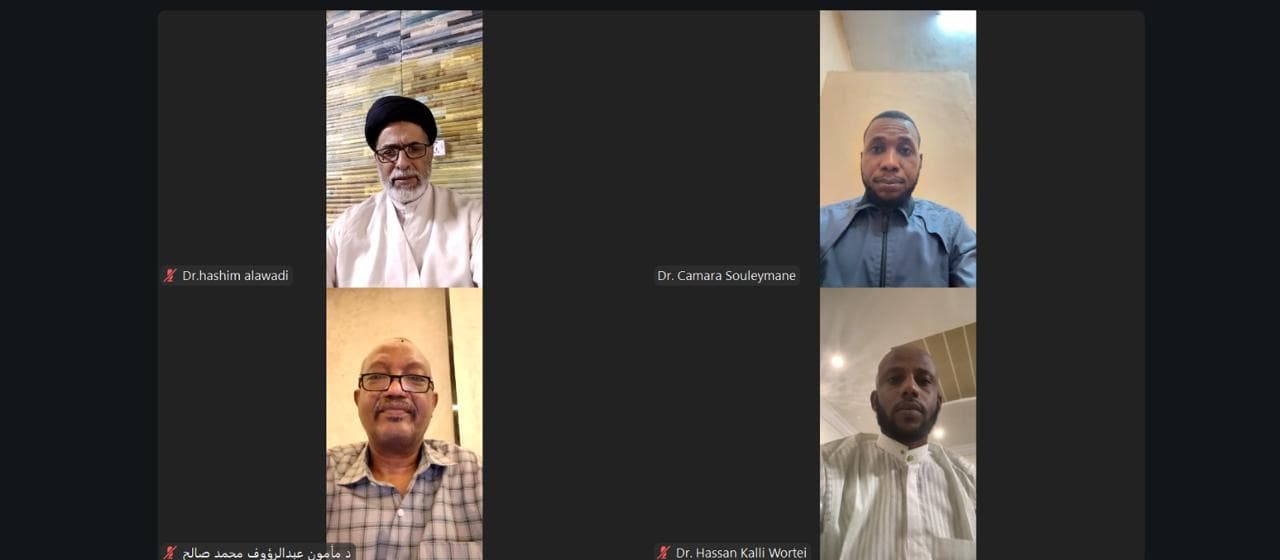
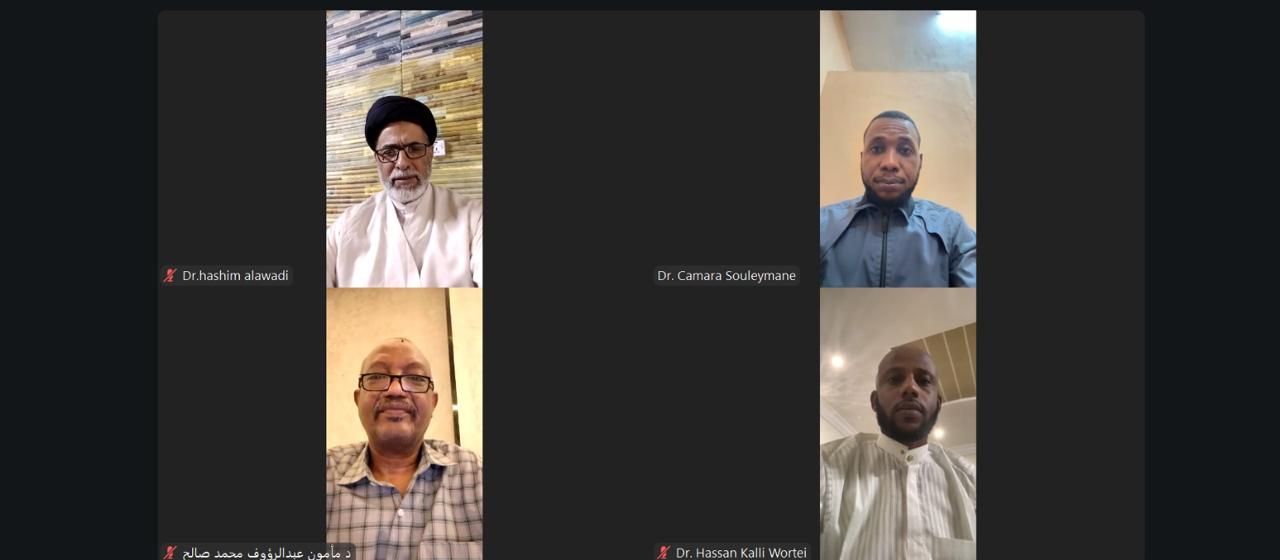
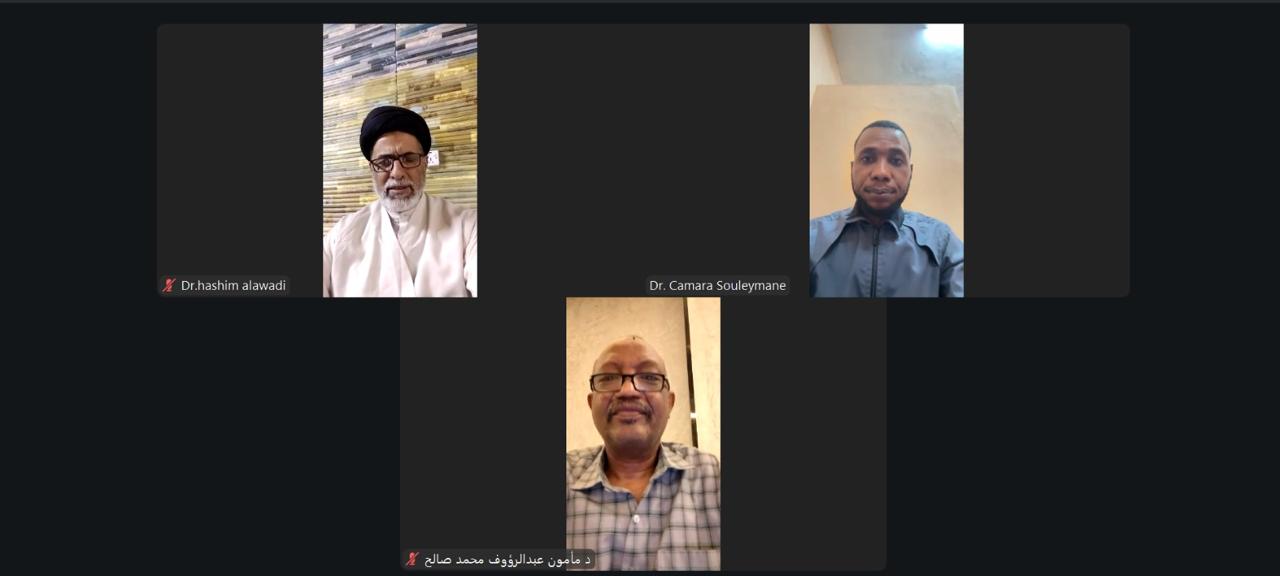
This was the setting for the session organized by the Afrabia Center for Afro-Iraqi Elites, titled “The Future of the Arabic Language in West Africa: Abidjan as a Model.” The session placed the reality of Arabic in Côte d’Ivoire at the center of a discussion that approached the subject from several angles. It began with history but did not remain confined to it, moving on to the impact of colonialism, the relationship between Arabic and the Islamic sciences, the role of Arab communities, the dominance of the Francophone educational system, and the possibilities for using Arabic in education, diplomacy, cultural exchange, and cooperation between Africa and the Arab world.
From Marginalization to Recognition: The Question of Arabic Extends Beyond the Past
Dr. Hashim Al-Awadi, Director of the Afrabia Center for Afro-Iraqi Elites and chair of the session, opened the discussion by reflecting on the framework presented by Dr. Kamara Soliman on the history of Arabic in West Africa and Côte d’Ivoire.
Al-Awadi summarized the presentation around four principal lines of inquiry: the historical roots of Arabic in West Africa and Côte d’Ivoire; the period of growth and development during which the language moved from marginalization toward recognition; the challenges it faces today; and the opportunities available to it and its prospects for the future. For Al-Awadi, however, outlining these themes was not simply a summary of what had already been presented. It was a starting point for questions more closely connected to contemporary realities.
Drawing on his numerous visits to Côte d’Ivoire and his stays in Abidjan, Al-Awadi moved directly to the heart of the issue, asking whether the challenges facing Arabic today were still primarily rooted in the colonial legacy, or whether new internal and environmental factors were also hindering its expansion.
He raised a broader question about the relationship between Arabic and the Islamic sciences: Did this association help protect and spread Arabic, or did it, in some settings, confine the language within a narrow religious framework? And has a perception emerged among some groups that learning Arabic necessarily means pursuing Islamic studies or entering the religious sphere?
At its core, the question went beyond the language itself to its place in the social consciousness: how society perceives Arabic, and whether it is regarded as a language of culture, civilization, and knowledge, or merely as a means of accessing religious texts.
Kamara Soliman: The Effects of Colonialism Did Not End with the Departure of the Colonizer
Responding to Dr. Hashim Al-Awadi’s questions, Dr. Kamara Soliman, a specialist in applied linguistics from Côte d’Ivoire, argued that understanding the position of Arabic today requires examining how the colonial movement dealt with the language.
He explained that colonialism did not treat Arabic as an independent language of culture and civilization. Instead, it associated Arabic with Islam, making the language, in the colonial imagination, part of a religious presence perceived as competing with the colonial project. As a result, suppressing Arabic came to be treated as part of efforts to contain the spread of Islam.
The effects of that period, Kamara argued, did not end with the end of colonial rule. Some of its legacies remain present in social perceptions. He noted that some families continue to view the Arabic language and Arabic schools with disdain and are reluctant to send their children to Arabic-Islamic schools because they believe Arabic does not offer clear professional prospects.
The challenge therefore moves from a historical question to a contemporary problem. When a language is perceived by families as tied to an educational path that does not lead to viable career opportunities, the decision to learn it is no longer merely a linguistic one. It becomes a social and economic decision as well.
When Arabic Becomes Synonymous with Islam: The Other Side of the Problem
Dr. Hashim Al-Awadi returned to the cultural dimension of the question, asking about the effects of associating Arabic with Islam and the Islamic sciences, and whether this association has made the study of Arabic appear in some settings to be necessarily connected to Islam or religious studies.
Kamara offered a two-sided reading of this relationship. On the positive side, learning Arabic gives Africans an opportunity to engage with Islam and Islamic law, particularly because a substantial part of the Islamic legal and scholarly heritage is written in Arabic. The spread of the language therefore historically contributed to the transmission of religious knowledge.
The other side of the issue, however, is more complicated. Some governments, particularly in countries that adopt secular systems, are wary of expanding the academic space available to the language if, in their view, this could lead to a broader religious presence within society.
Kamara noted that attempts to separate Arabic from religion have appeared in the establishment of secular schools. Schools receiving government support impose conditions and follow curricula in which French-language subjects dominate, while Arabic subjects are given limited space in both curriculum volume and teaching time.
The discussion thus arrived at what may be considered one of the session’s clearest ideas: a crisis of perception surrounding Arabic. When the language is reduced to Islam and the Islamic sciences, a substantial part of its cultural and civilizational history and function is obscured.
As Kamara emphasized in his response, Arabic is not exclusively associated with Islam. It is a language with a history that predates Islam and carries a broad cultural and civilizational heritage. Reducing it to a single function limits its possibilities and affects its position within education and society.
Abidjan: Arab Communities at the Heart of the Picture
From the educational and cultural challenges, Al-Awadi turned to a different question concerning Abidjan itself. During his visits, he had observed the presence of a large Arab community, particularly the Lebanese community, alongside other Arab communities, and asked to what extent these communities contribute to supporting the presence of Arabic in Côte d’Ivoire’s economic capital.
Kamara stressed that the role is not limited to the Lebanese community but also involves Egyptian, Syrian, and other Arab communities. He pointed to efforts and initiatives undertaken by these communities to support Arabic through cultural institutions and movements.
These efforts, he explained, are not linked to a single party or country. They include initiatives from Lebanon, Egypt, Dubai, the Kingdom, and others, making Arab communities one of the components of the broader environment that can support the presence of Arabic in Abidjan.
This argument is consistent with the material accompanying the session, which points to a growing presence of Arabic in Abidjan through seminars, cultural and poetry events, activities marking World Arabic Language Day, and the academic and cultural work of associations and clubs interested in the language and literature.
From Abidjan to Chad: Francophonie in Tension with Arabic
The discussion did not remain confined to Côte d’Ivoire. The participation of Dr. Hassan Keli from Chad broadened the perspective to include the position of Arabic across the Sahel and West Africa.
His intervention focused on the continuing influence of the Francophone system in sub-Saharan African countries. He stressed that its influence extends beyond language to political, cultural, and economic spheres, as well as government administrations, official occasions, and decision-making institutions.
According to his presentation, the continued dominance of Francophone elites within institutions represents one of the obstacles to the expansion and spread of Arabic in formal education. Drawing on the experience of Chad, Dr. Hassan referred to attempts to establish Arabic-language schools alongside the Francophone educational system and to the protests that accompanied demands for a fairer space for Arabic-language education and Islamic subjects.
The solution adopted in the experience he presented, however, was not entirely balanced. Morning sessions were allocated to Francophone students, while afternoon sessions were assigned to Arabic-speaking students. He explained that this arrangement created practical difficulties for students, particularly during the summer months, when high temperatures make it more difficult for children and young people to concentrate during afternoon classes.
Dr. Hassan therefore argued that the continuing influence of the Francophone system remains an important factor behind the limited spread of Arabic and Islam in a number of countries in the region, and that the effects of this system continue to shape the reality of the Arabic language today.
Dr. Mamoun: Arabic Is Not a Foreign Language; It Is Part of Africa’s History
In his intervention, Dr. Mamoun took the discussion in a broader direction. He rejected the idea of reducing Arabic to a foreign language introduced into the continent, arguing instead that it has become part of Africa’s historical, cultural, social, and political fabric.
From this perspective, he argued that Arabic can be used in a range of fields, from African-Arab dialogue and cultural exchange to education, diplomacy, and economic cooperation. In his view, language is not simply a means of communication; it is also one of the instruments of soft power and diplomatic engagement.
This argument carries particular significance in West Africa and the Sahel, which Mamoun described as regions rich in potential but also affected by instability and security fragility, factors that can influence the movement of languages and cultures and the spread of education.
At the same time, he stressed that the presence of Arabic in the region is longstanding and that its ties to Africa did not begin in the modern era. Rather, they were connected to ancient kingdoms, migrations, tribal movements, and longstanding relations with North Africa.
From Arab Memory to African Languages: An Influence That Crosses Borders
Mamoun did not limit his discussion to the historical presence of Arabic. He also pointed to its influence on a number of African languages, explaining that Arabic vocabulary has entered local languages and that this linguistic interaction reflects the depth of historical contact between Arabic and African societies.
In this connection, he cited a linguistic example involving forms that combine local languages with Arabic, suggesting that the relationship was not simply one of a language imposing itself on another environment, but one of prolonged interaction between languages, cultures, and communities.
He also discussed the experience of Sudan, referring to the potential role of universities and research centers in promoting Arabic. He cited the experience of International University of Africa in receiving students from West Africa and other parts of the continent to study in Arabic, alongside specialized institutions dedicated to teaching Arabic to non-native speakers.
From this perspective, the university appears as more than an educational institution. It can become a bridge connecting African communities with the Arab world and a means of transferring expertise and experience in Arabic-language education from one country to another.
Universities, Arab Communities, and Research Centers: Where Does the Solution Begin?
While the interventions revealed historical, institutional, and social challenges facing Arabic, they also outlined a number of paths that could provide a foundation for renewed action.
Mamoun stressed the importance of universities, research centers, Arab communities, and cultural and social activities in strengthening the presence of Arabic. He argued that there are large numbers of Arabic-speaking communities, tribes, and populations in West Africa whose presence can serve as a foundation for further development, rather than treating Arabic as a marginal language.
For his part, Kamara’s intervention suggested that overcoming the crisis surrounding Arabic begins with redefining its place in society and moving beyond the practice of confining it to the Islamic sciences or religious schools. As the discussion as a whole revealed, the problem does not lie in a lack of historical roots or social presence. Rather, it lies in the limited range of functions through which the language is perceived.
The session’s interventions converge here with the academic material prepared on the situation of Arabic in Côte d’Ivoire, which argues that the next stage requires curriculum development, teacher training, improvements to the educational environment, expansion of university-level education, encouragement of academic research, a stronger presence for Arabic in the media and digital sphere, stronger links between graduates and the labor market, and the development of scientific and cultural partnerships with Arab and international institutions.
From Preserving Arabic to Redefining Its Role
Taken as a whole, the session shows that the question of the future of Arabic in West Africa cannot be reduced to a simple question about the number of schools or students. The issue is broader.
Arabic has a long history in the region, but it faces a legacy of colonial marginalization, a social perception that in some settings associates it exclusively with religion, and an educational system dominated by French, alongside challenges involving curricula, teachers, academic recognition, and professional pathways.
At the same time, there are indications of a gradual shift. The material accompanying the session points to the opening of the first Arabic language department at a public university in Côte d’Ivoire, as well as expanding cultural, literary, and academic activity in Abidjan, including Arabic-language events, seminars, poetry festivals, and the work of scholarly associations.
This means that Arabic is not starting from zero today. At the same time, it has not yet reached a position that would make it a fully established part of the broader academic and cultural sphere.
The challenge, then, is not simply to preserve the language, but to expand its functions: to make it a language of education, research, culture, creativity, media, employment, and diplomacy, alongside its religious function.
The Future of Arabic: From the Margins to a Broader Space
By the end of the discussion, the picture appeared more complex than a simple binary of “presence” and “absence.” Arabic is present and has deep roots, but it is searching for a new place that corresponds to the realities of contemporary African societies.
If colonialism contributed to reshaping the language’s image and narrowing its functions, restoring its position today will not be achieved simply by returning to the past. What is required is to transform that historical heritage into a new form of presence capable of responding to questions of education, the economy, culture, the labor market, diplomacy, and technology.
Abidjan emerges here as an important model: a city where communities, educational institutions, cultural activities, diplomatic missions, and Arab-African relations intersect, creating the possibility for Arabic to move beyond a limited space toward a broader cultural and educational presence.
Dr. Mamoun expressed this idea from another angle by placing Arabic within the context of soft power and African-Arab relations. He emphasized that the language can serve as a tool for dialogue, cultural exchange, education, diplomacy, and economic cooperation.
At the close of the session, Dr. Hashim Al-Awadi renewed his thanks to Dr. Kamara Soliman and all the participating guests, stressing the importance of the issues raised concerning the reality of Arabic in West Africa and Côte d’Ivoire in particular, before announcing a transition to other topics related to Afro-Iraqi elites.
Kamara Soliman, for his part, concluded his participation by thanking the Afrabia Center, its staff, and the participants in the seminar, considering the opportunity to discuss the Arabic language in West Africa an important space for examining its future.
The session therefore did not produce a simple answer to the question of Arabic’s future. Instead, it reformulated the question itself: How can a language with deep roots in Africa recover its broader functions and move from being perceived largely as a language associated with religious education to becoming a language present in universities, culture, knowledge, and public life?
The answer suggested by the participants’ interventions does not begin with a return to the past alone. It begins with building new institutions, developing education, expanding partnerships, drawing on universities, Arab communities, and research centers, and presenting Arabic as part of Africa’s history and present—not as a foreign language imposed upon the continent.
Arabic in West Africa has not lost its roots; it is now searching for a place worthy of that heritage within the continent’s future.
Together, we shape the consciousness of the present and claim the narrative of the future.