
Jijel, eastern Algeria, is reeling from one of the region’s deadliest forest-fire disasters after fires swept through several municipalities on August 27 and 28, 2026, leaving a provisional death toll of 73 in the municipality of Friday Beni H’bibi alone. Search operations for missing people and efforts to bring the fires under control are still underway.
The municipality of Friday Beni H’bibi announced a provisional toll of 73 victims, while the final death toll has yet to be established as search and recovery operations continue in areas hit by the fires. According to circulating reports, the victims are being held at hospitals in Jijel and El Milia. The municipality has called on the families of those named on the list to go to El Milia Hospital with their national identity cards to complete the procedures for receiving the remains of their relatives.
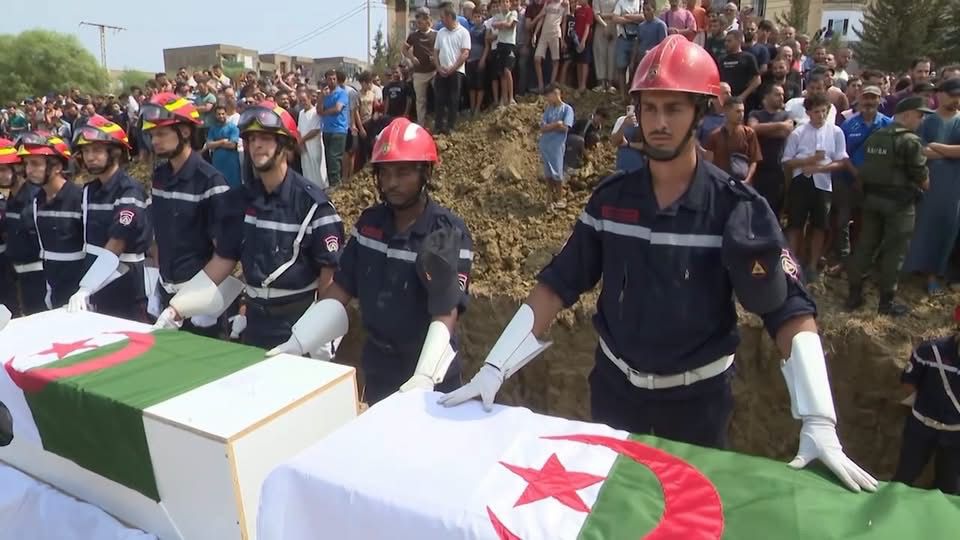
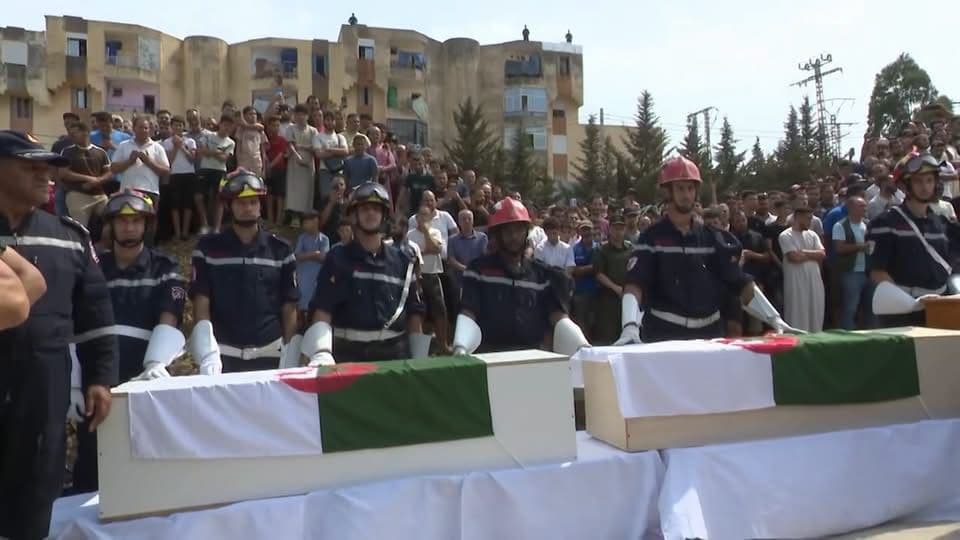
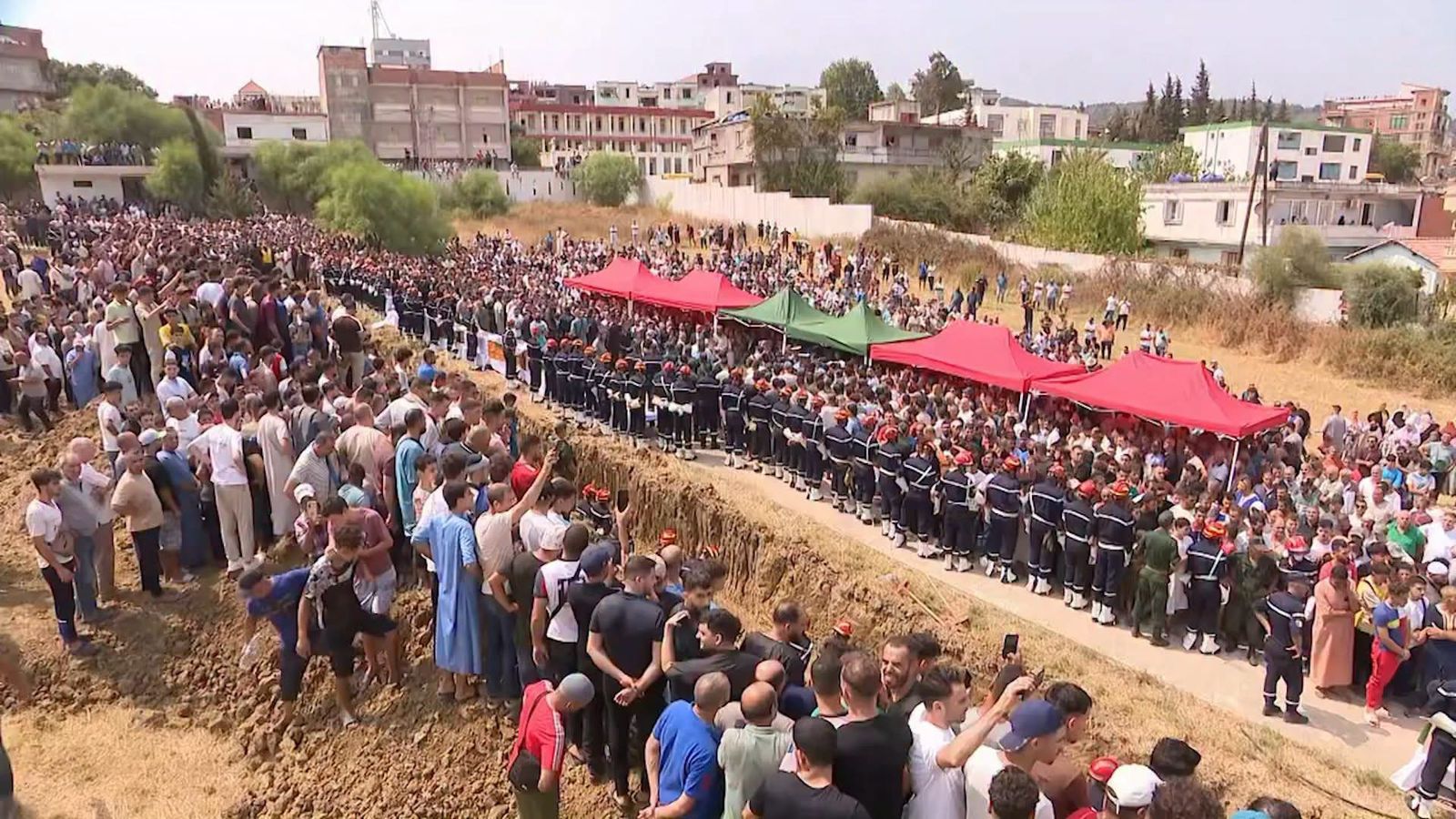
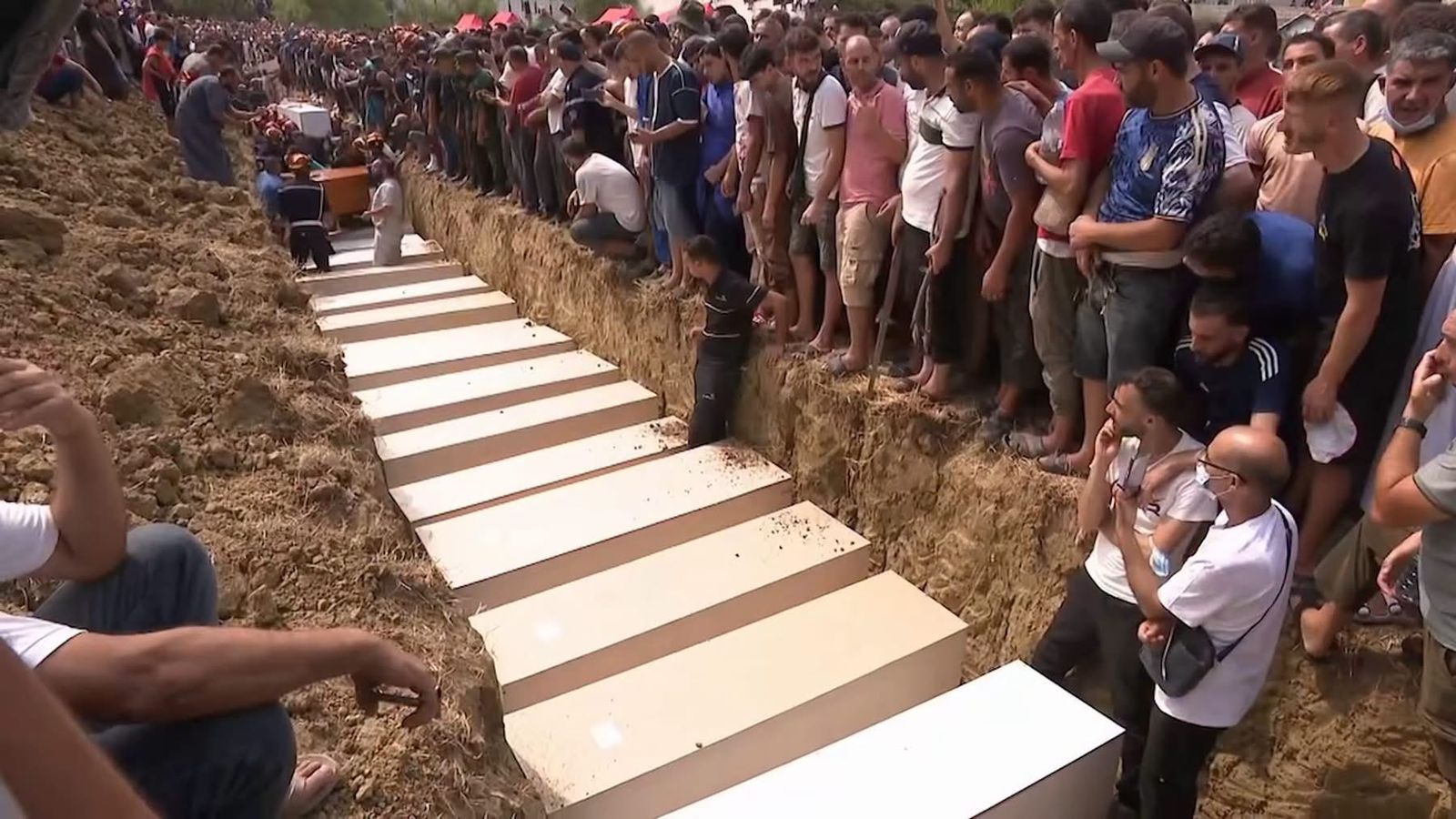
The procedures came as the town of Friday Beni H’bibi witnessed harrowing scenes, with the collective burial of 39 victims following Friday prayers. Prime Minister Sifi Ghrieb attended the ceremony, along with large numbers of local residents.
The funeral reflected the scale of the tragedy, as large crowds gathered to accompany the victims to their final resting place. Civil Protection personnel also took part in carrying the coffins and conducting the burial operations.
Media reports citing testimonies from the area said that 21 members of the same family died in the upper areas of Beni H’bibi. Other accounts described the recovery of bodies from areas surrounded by fire, as well as people who died while trying to flee their homes or save their property and livestock.
The fires were not confined to the municipality of Friday Beni H’bibi. They also spread to other parts of Jijel Province, including Tisbilane, Bordj Tahar, Ouled Askeur, El Milia, Chehna and Texenna, as well as other areas where firefighting and rescue operations were carried out on a large scale.
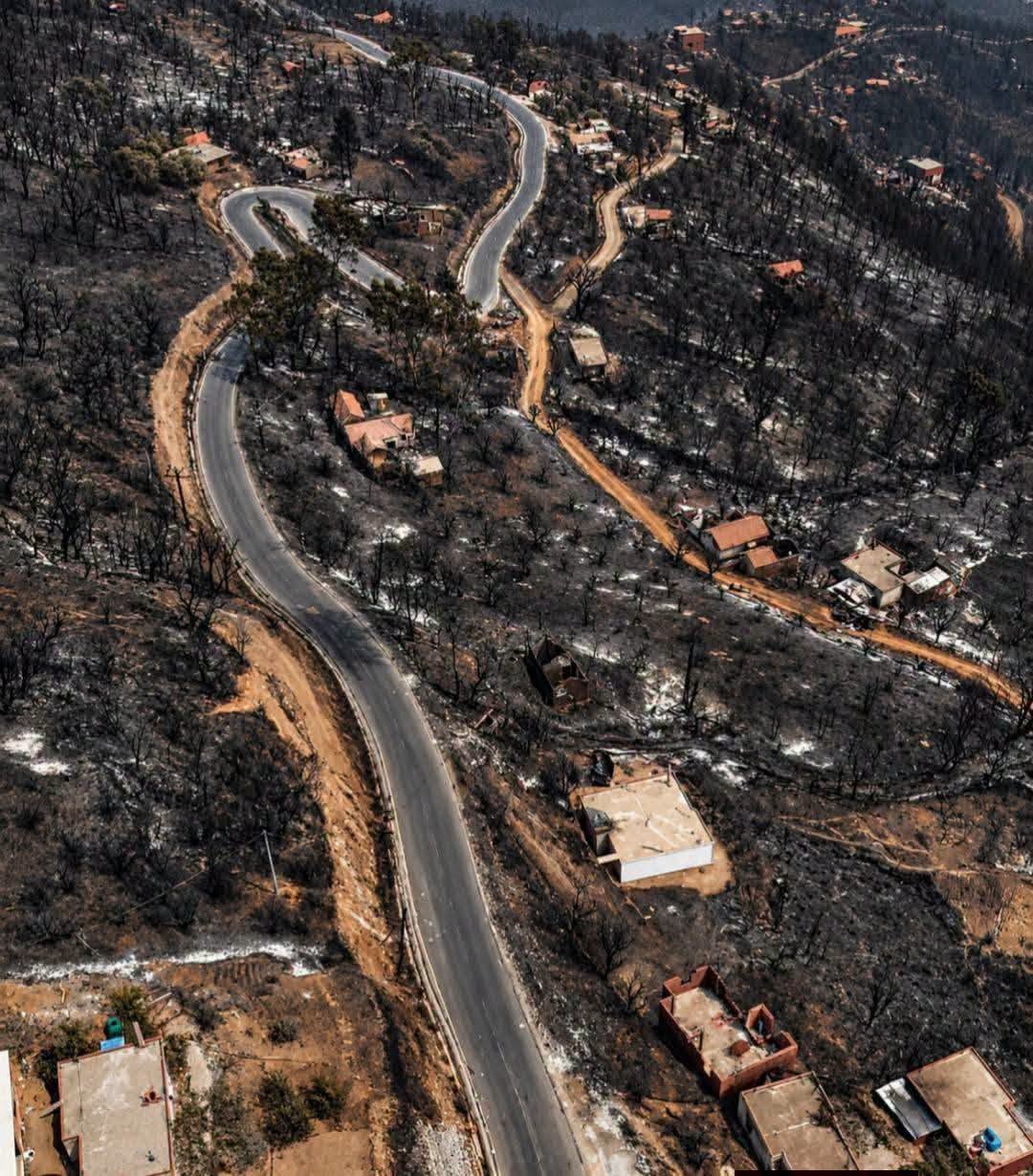
Initial estimates indicate that extensive areas of forest cover in the region were affected. The area is characterized by rugged terrain and dense forests. The fires also caused significant damage to property and agricultural areas, in addition to the human losses, with the death toll still subject to change.
At the same time, the Directorate General of Civil Protection said that its teams had brought 110 fires under control out of a total of 174 recorded between August 27 and 28. Other fire outbreaks remained under firefighting operations, with Jijel among the provinces most severely affected, recording 20 ongoing fires, according to figures released by Civil Protection.
The Jijel disaster has once again put Algeria’s forest-fire problem in the spotlight. Forest fires recur during the summer, and their severity increases when high temperatures coincide with drought and strong winds, conditions that can accelerate the spread of flames through forested areas.
The region’s difficult terrain also makes firefighting operations more challenging, particularly in mountainous and rugged areas where access for Civil Protection teams and firefighting equipment can be difficult. Winds and dry vegetation can further enable fires to spread rapidly from one area to another.
Forest fires are not caused solely by natural factors. Human activity also remains a factor in a number of cases, whether through negligence or the lighting of fires near vegetation, alongside other possibilities whose causes require investigation and verification in each individual incident.
The Jijel tragedy follows several years in which Algeria has experienced deadly forest fires, bringing prevention, early warning systems and forest management back to the forefront whenever the Summer season arrives.
Reducing the damage, however, does not begin only once fires have broken out. It also depends on monitoring areas at risk and responding rapidly when fire outbreaks are detected. Modern monitoring tools, including satellites and drones, can contribute to this effort, alongside maintaining forest tracks and preparing access routes that allow firefighting teams to reach affected areas as quickly as possible.
Local residents and volunteers also have a role to play in forested areas, particularly during the early stages of a disaster. Rapid local intervention, coordinated with Civil Protection services, can help limit the spread of fires and rescue people in threatened areas.
Yet the scale of the losses caused by the Jijel fires goes beyond figures for the number of fires and the area of forest cover affected. The disaster has become a human tragedy in which families have lost relatives, while rescue teams have faced search, recovery and mass-burial operations that will remain deeply etched in the memory of the local population.
As firefighting operations continue and authorities assess the losses, forest fires are once again at the center of public discussion in Algeria—not simply as a seasonal phenomenon, but as a threat to people, the environment and property that requires sustained preventive policies before fires break out, rather than relying solely on intervention once they have become a disaster.
May God have mercy on the victims and grant their families patience and strength.